
Are There Crocodiles Or Bull Sharks In The Noosa River?
Crocodiles sit outside their known range on the Noosa River, and the sunset boats never enter the water. A calm look at what the Queensland Government says, what swims in the river, and what a river cruise actually involves.
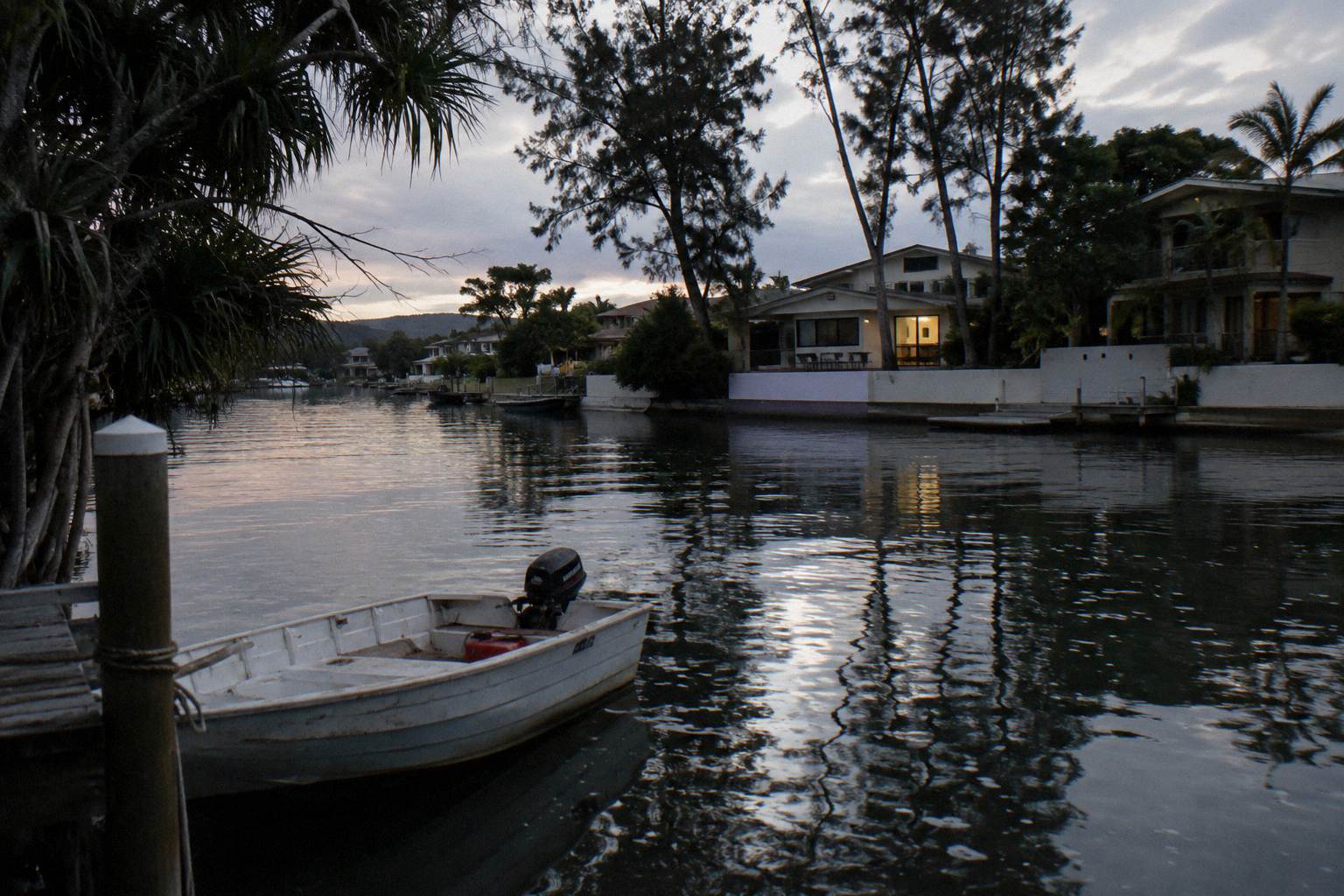
The question arrives more often than you would think, usually the night before a boat trip. Somebody in the family has watched a documentary about Queensland waterways, and now the whole booking hangs on one worry: what is in that water? The short, reassuring version is that crocodiles are outside their known range here, and the cruises never put you in the river at all. The longer version, with the government mapping, the shark question answered plainly, and a walk through what an evening on the water actually looks like, follows below. Everything here comes from Queensland Government publications, the Bureau of Meteorology, and the operators' own pages.
Crocodiles are outside their known range on the Noosa River. The Queensland Government maps estuarine crocodiles as known to occur between Gladstone and Cape York Peninsula, and Noosa sits well south of Gladstone. Bull sharks are a different matter: no figure or confirmation exists in the material covering these cruises, so nothing can be promised either way. The evening boats never include swimming, so passengers stay on deck throughout.
Start with the crocodile half, because it has a clear official answer. The Queensland Government's estuarine crocodile page states that the animals "are known to occur between Gladstone and Cape York Peninsula, and throughout the Gulf of Carpentaria." Noosa is hundreds of kilometres south of Gladstone, and the government's management-zones material goes further: it places the southernmost crocodile population at Rockhampton and describes any animals found further south as "considered vagrants" that are "rarely present south of the Fitzroy River." You can read the government's own words on the Queensland Government estuarine crocodile page.
That is why you will not find the phrase "no crocodiles" anywhere in a careful answer. Wildlife agencies do not deal in absolutes about animals that can travel. What they publish is a range map, and Noosa sits outside it, closer to the vagrant fringe than to any established population. For a person boarding a river boat, that distinction is mostly academic: the practical question is whether the trip is designed around a risk, and it plainly is not.
The shark half of the question is genuinely open. Bull sharks live in many Queensland rivers, and the Noosa River is a tidal system connected to the ocean, so the question is reasonable.
What settles most nervous travellers is not the biology but the design of the trip. Every evening cruise on Noosa Sunset Cruises keeps passengers on the vessel from boarding to return. There is no swimming stop, no wading, no entering the water at any point. The crew's job is commentary and drinks, not wildlife management.
If the goal is simply to see the river without any anxiety, the daytime option is a gentle starting point. The Noosa River And Canals Day Cruise runs 2 hours from the Gympie Terrace jetty in Noosaville, from US$26 per person, with skipper commentary and calm conditions. Check availability
Where Crocodiles Actually Live In Queensland
The known estuarine crocodile range runs from Gladstone north to Cape York Peninsula, plus the Gulf of Carpentaria. Noosa sits south of Gladstone, outside that range, and the government's management zones place the southernmost population at Rockhampton. Animals south of the Fitzroy River are described as vagrants, rarely present. That places Noosa firmly outside crocodile country on the state's own mapping.
It helps to picture the Queensland coast in three bands. The far northern band, from around Cape York down through the Gulf, is core crocodile habitat: estuaries, rivers and coastlines where the animals are a routine part of the ecosystem and signs tell you so. The middle band, running down towards Rockhampton, holds the southernmost established population. Below the Fitzroy River, the government's language shifts from populations to vagrants, individual animals that turn up rarely and unexpectedly.
Noosa is on the Sunshine Coast, well into that southern stretch. When the state government publishes crocodile advice for the areas around Noosa, the framing is about vagrants and range edges rather than resident animals, which is a very different situation from the signed swimming holes of the tropical north. None of this is a promise, and wildlife does not read maps, but the mapping is consistent, official and unambiguous about where the known range ends.
| Band of the Queensland coast | Crocodile status per government mapping |
|---|---|
| Cape York Peninsula and Gulf of Carpentaria | Known to occur, core habitat |
| Gladstone northwards | Known to occur |
| Around Rockhampton and the Fitzroy River | Southernmost established population |
| South of the Fitzroy River | Vagrants only, rarely present |
| Noosa and the Sunshine Coast | Outside the known range |
One habit worth borrowing from North Queensland travellers, wherever you swim in Australia: read local signs and follow local advice around any water. That is good practice on any coast, and it costs nothing.
What About Bull Sharks In The River?
No figure or confirmation about bull sharks in the Noosa River exists in the material covering these cruises, so there is nothing responsible to print about their presence or absence. Bull sharks do live in some Queensland river systems, which makes the question fair. But the cruises never include swimming, so passengers never enter the water at any point of the trip.
This is the part of the answer where a lot of travel content goes wrong, either declaring the river shark-free or ramping up the drama. Neither helps a nervous reader.
What can be said with confidence is about the boats, not the fish. The sunset cruises are sightseeing trips on enclosed or open-deck vessels, with passengers on board the entire time. The day cruise mentions a beach stop with swimming in the summer months only, and even that is a separate daytime product with its own conditions. On the evening trips there is no water contact at all, no swimming stop, no wet feet unless it rains.
So the practical decision tree for a nervous traveller looks like this: if you never enter the water, the question of what swims in it changes character entirely. It becomes a matter of looking over the rail at a beautiful river system, which is exactly what these trips sell.
The Noosa Queen sunset cruise, rated 4.9 from 82 reviews, is a 1.5-hour evening trip from Noosa Marina in Tewantin, from US$26 per person, with a licensed bar and live commentary. It runs past Makepeace Island, a privately owned island, and towards Lake Cooroibah, with a chance to spot local birds and kangaroos, in the operator's hedged wording.
What Wildlife You Might Actually See From The Boat
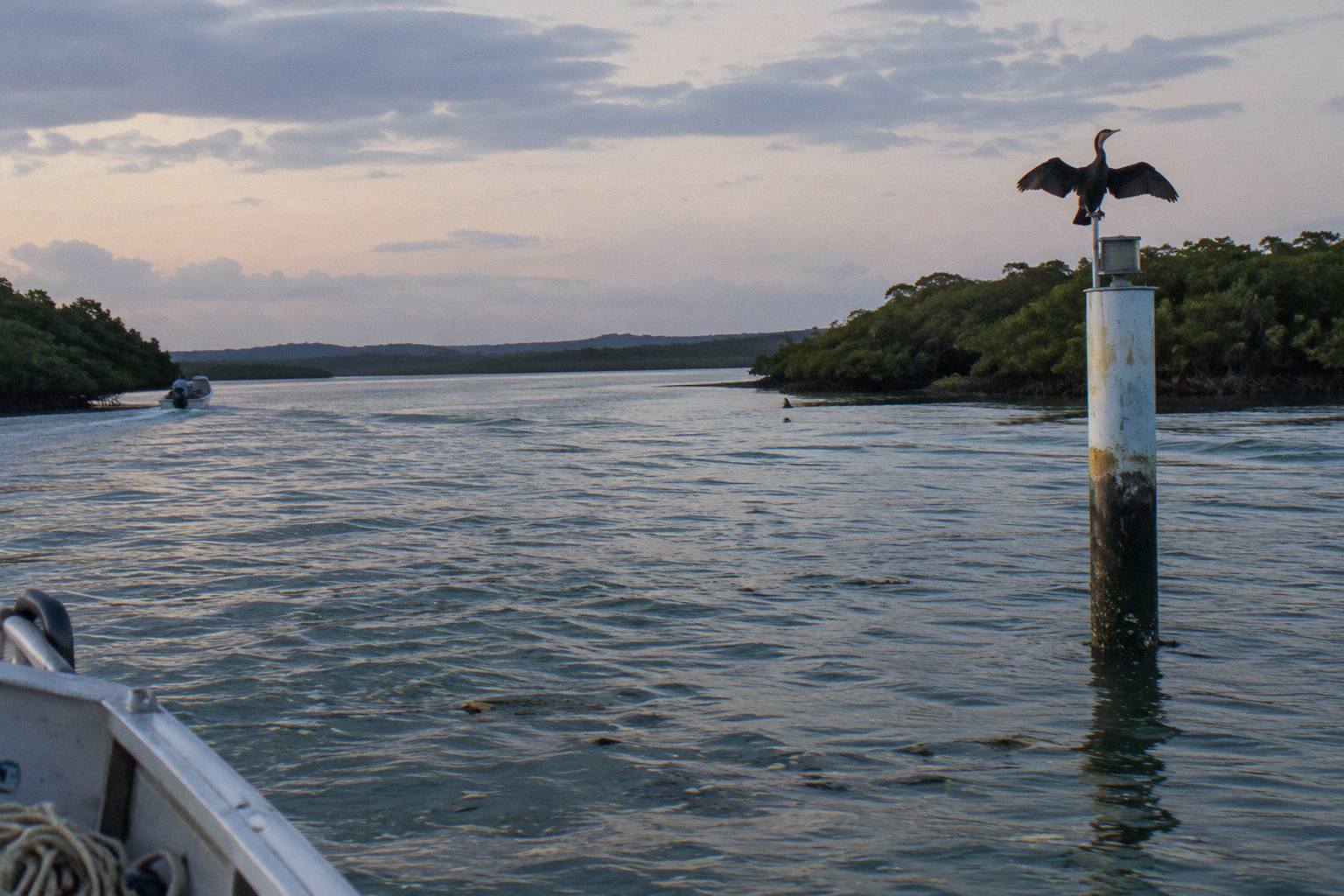
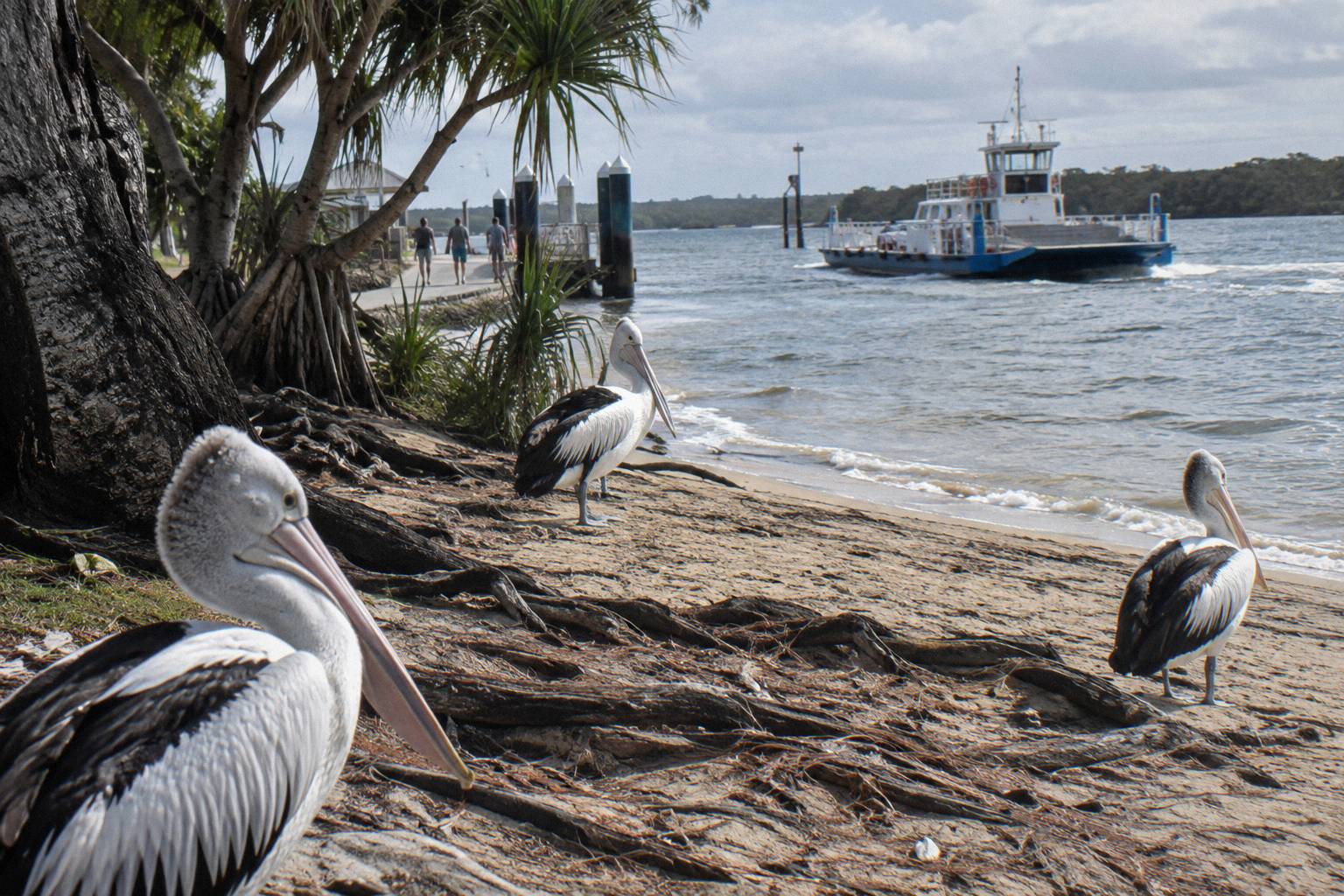
The Noosa Queen operator names five birds guests often spot: Whistling Kite, Australian Pelican, Great Egret, Pied Cormorant and Azure Kingfisher. Kangaroos appear in the operator's wording as a chance to spot, never a promise. The Noosaville cruise adds skipper commentary on local wildlife along the river and canals.
The real star list on this river is feathers, not teeth. An Azure Kingfisher flashing across still water is the kind of sighting people remember for years, and the pelicans work the shallows with a prehistoric patience that photographs beautifully. The table below is a plain wildlife list: only what operators themselves put their names to, with the hedged wording kept as hedged.
| Animal | Where the mention comes from | Exact status |
|---|---|---|
| Whistling Kite | Noosa Queen operator | Often spotted |
| Australian Pelican | Noosa Queen operator | Often spotted |
| Great Egret | Noosa Queen operator | Often spotted |
| Pied Cormorant | Noosa Queen operator | Often spotted |
| Azure Kingfisher | Noosa Queen operator | Often spotted |
| Kangaroos | Noosa Queen booking summary | A chance to spot, hedged |
Dolphins deserve their own sentence because they are the most searched and least certain. No operator lists dolphins for these cruises. If seeing dolphins is the reason you would book, hold that expectation loosely. If seeing kingfishers, pelicans and a river turning gold sounds good, the trip delivers on its own terms.
The Noosaville sunset cruise, rated 4.7 from 263 reviews, frames its wildlife as part of the skipper's live commentary along the river and canals, alongside mountain views and the homes lining the water. It is a 2.5-hour round trip from Noosaville, from US$26 per person, and guests are welcome to bring their own snacks. Our guide to what you actually do on a sunset cruise walks through the whole evening hour by hour.
Do The Sunset Cruises Ever Include Swimming?
No. None of the sunset cruises includes swimming, wading or any water entry; passengers board, stay on deck, and step off at the same jetty. The only swimming mention anywhere in these products is on the daytime river and canals cruise, whose summary notes a beach stop for swimming in the summer months only. Evening trips are strictly dry.
This is the fact that should close the worry for most readers. The fear behind the crocodile question is usually not about boats, it is about being in the water with something. On these trips you never are. The vessels are purpose-built sightseeing boats: the Noosa Queen is a multi-decked motor vessel with a saloon deck and open forward, aft and upper decks, carrying up to 65 guests. The HV Stillwater is a hybrid-electric catamaran-style vessel for up to 40 guests with wide aisles and a fully accessible toilet.
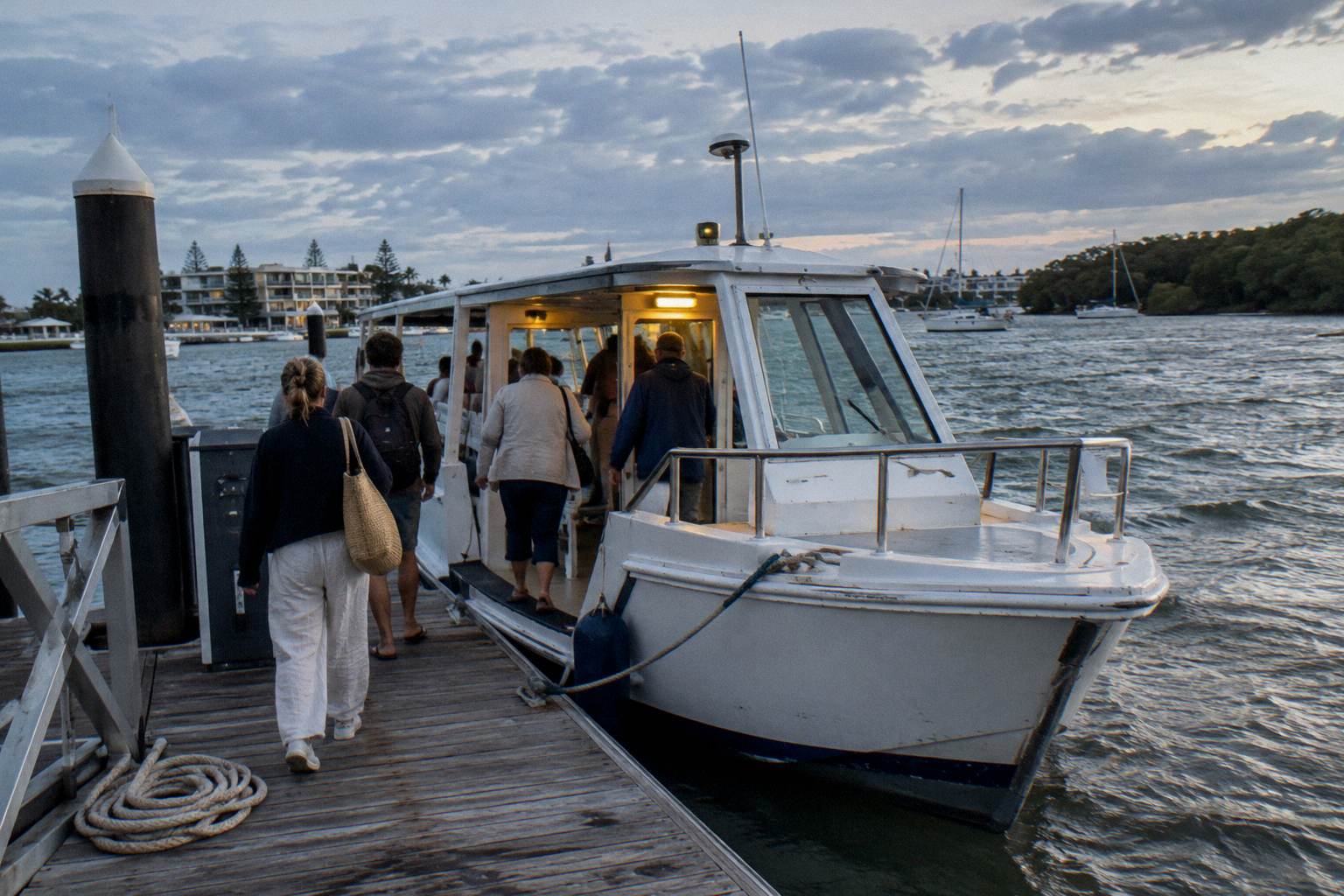
Boarding is a short step from a jetty or marina pontoon, and the crew handles the gangplank end of things. Once aboard, the evening is deck chairs, a drink from the licensed bar, and commentary about the river. The Noosa Queen's advice to bring comfortable clothes in layers with a light jacket is the main practicality, and cards and cash are accepted on board. None of it involves the water below the hull.
For families weighing whether kids can come, the Noosa Queen is stated as family friendly with children welcome and no minimum age given, and the Noosaville cruise likewise names no minimum age on its booking page. The guide to evening boat trips with kids covers the practical side in more depth.
Water Rules That Shape How The Boats Behave
Maritime Safety Queensland sets a 6 knot speed limit within 60 m of the southern shore from the Lake Doonella entrance to Noosa Sound and across Noosa Sound to Woods Bay. Vessels over 5 m may not anchor within 30 m of Makepeace Island or the northern shore, and face a 28-day annual anchoring cap. These rules keep the cruise corridor slow, quiet and close to shore.
One reason the river feels so placid on these trips is that the law requires it. The speed limit along the southern shore means the big boats are not racing anything; they glide. The anchoring restrictions around Makepeace Island protect the privately owned island's edge, which is also why the cruise narration points it out from the water rather than stopping there. There is no landing on the island on any of these trips.
| Rule | What it says | In force from |
|---|---|---|
| Speed limit | 6 knots within 60 m of the southern shore, Lake Doonella entrance to Noosa Sound, and across Noosa Sound to Woods Bay | 8 September 2023 |
| Anchoring exclusion | No anchoring for vessels over 5 m within 30 m of Makepeace Island or the northern shore | 31 May 2025 |
| Anchoring cap | 28 days per financial year for vessels over 5 m | 1 January 2026 |
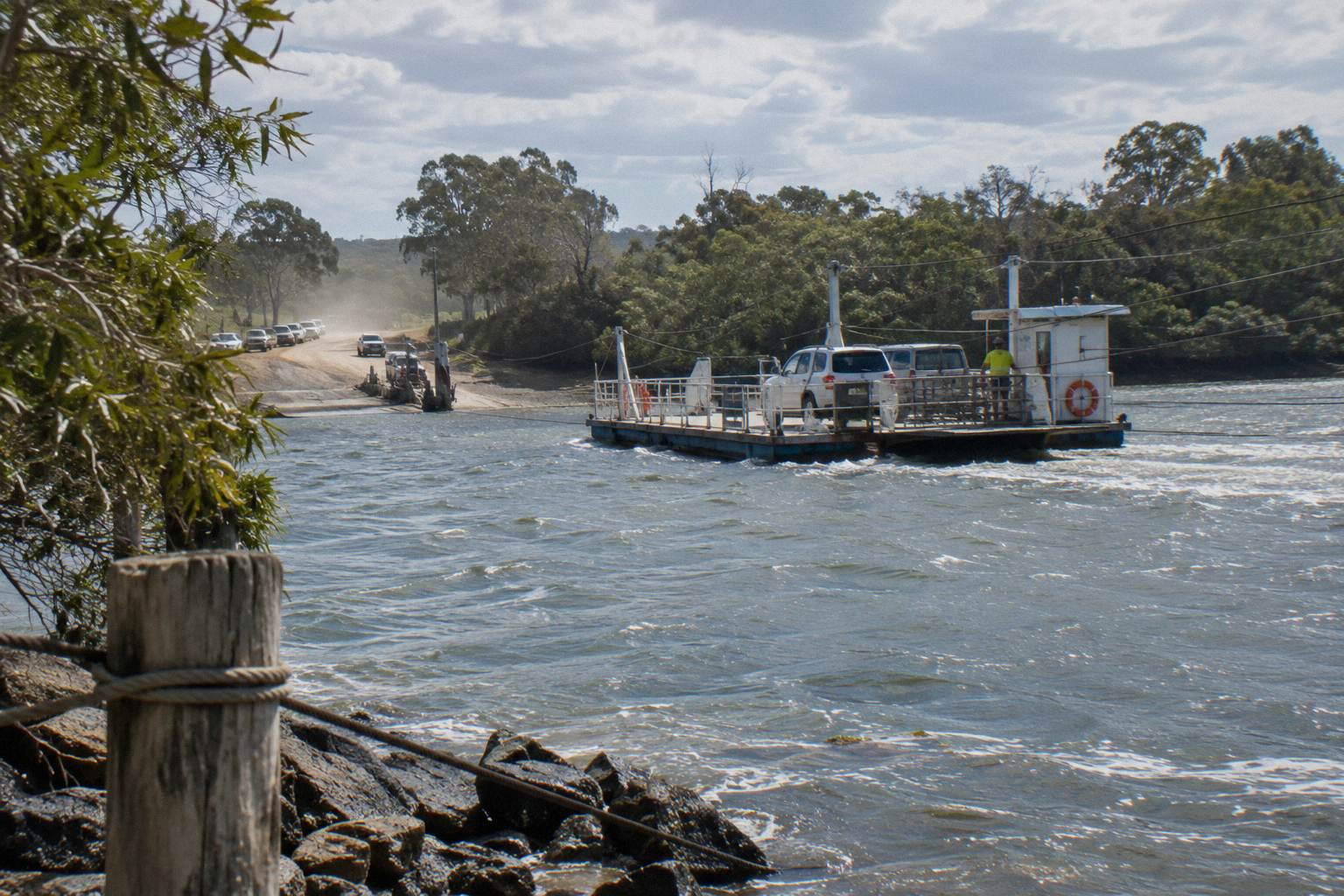
The North Shore ferry, a council service, crosses from the river end of Moorindil Street in Tewantin about every 10 minutes, and the sunset boats pass that crossing on the way upriver. Watching the small cable ferry trundle back and forth is part of the scenery on the Noosa Queen's route towards Lake Cooroibah. None of this is adventure boating; it is slow, regulated, residential-water cruising. If you are weighing the ferry against a proper cruise, our piece on Noosa ferry or sunset boat compares them directly.
What A Nervous First-timer Can Expect On Board
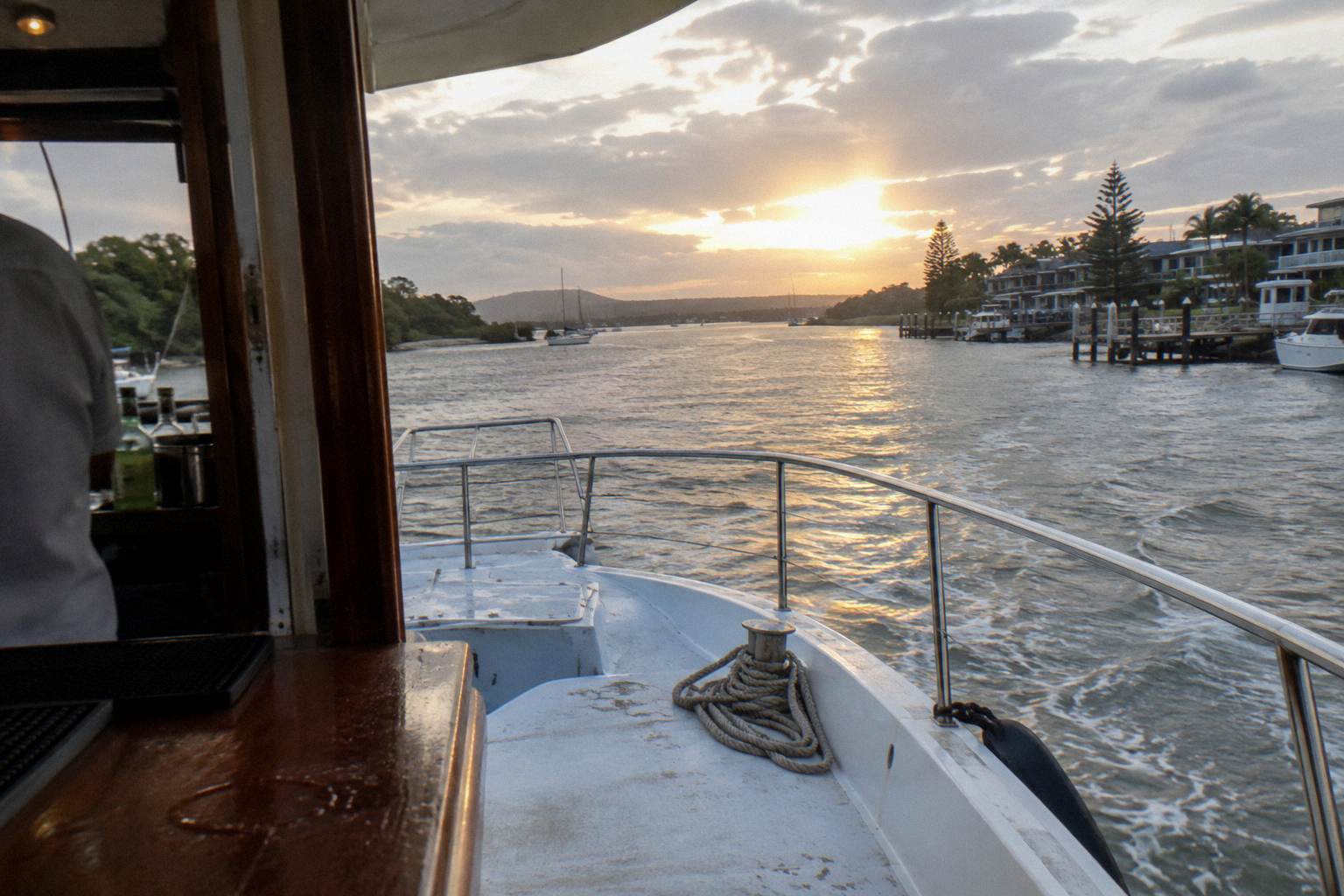
Expect a dry, slow, fully supervised evening on a stable vessel. The Noosa Queen has a saloon deck, open forward, aft and upper decks and a toilet on board, with up to 65 guests. Stillwater takes up to 40 guests with wide aisles and a fully accessible toilet. Free cancellation applies up to 24 hours before start on every trip.
Anxiety shrinks when the picture gets specific, so here is the specific picture. You arrive at the jetty, Noosa Marina in Tewantin for the Noosa Queen, with 15 minutes to spare before departure. Parking at Noosa Marina is free for 3 hours once you register your number plate by QR code or ticket machine, and extra time can be bought. You board, you find a seat, the ropes come off, and for the next hour and a half to two and a half hours the boat moves at cruising speed through sheltered water while the skipper talks about the river.
Weather worries are handled the same way across the board. Every trip states free cancellation up to 24 hours before the start for a full refund, and everyone books online, so there is no desk to visit. The Noosa Queen operator adds one further comfort: a full refund if it cancels for severe weather. For the other trips, ask the operator about their weather policy when booking. Our longer piece on wind, weather and cancellations covers the seasonal patterns.
The evening air is worth one practical line. Tewantin weather station's 31-year means put the July overnight minimum at 11.3 °C and January's at 22.0 °C, which is why layers and a light jacket are the advice, data you can explore on the Bureau of Meteorology climate averages.
If a first evening on the water still feels like a step, the daytime river trip is the gentlest possible introduction, 2 hours of the same river in full daylight. Check availability
Common Mistakes Nervous Travellers Make
The most common mistakes are cancelling over imagined water contact that never happens, assuming Queensland-wide crocodile advice applies to Noosa, expecting dolphins that no operator promises, and dressing for the daytime maximum rather than the evening minimum. Each mistake is avoidable with one piece of correct information, and none requires expert knowledge, just the facts above applied calmly.
The first mistake is treating a cruise like a swim. People who would not hesitate to ride a ferry hesitate here, purely because the word river conjures the tropics. Once the no-swimming design of the trips is clear, the objection usually dissolves. The second is over-reading the crocodile signage rule: advice written for Cairns and Cooktown waterways does not transfer to a river the government maps as outside the known range, and applying it universally turns a range map into a superstition.
The third mistake is wildlife triage. Booking in hope of dolphins, which no operator lists, sets up disappointment on a trip that reliably offers pelicans, egrets and kingfishers instead. The fourth is clothing: the January mean maximum of 28.7 °C drops to a mean minimum of 22.0 °C, and in July the swing runs from 21.4 °C down to 11.3 °C, so the deck at sunset is always cooler than the beach at lunch. Layers fix it. The fifth is arriving flustered: 15 minutes before departure at Noosa Marina, with the parking plate registered, removes the last stressor of the evening.
The Noosaville sunset cruise suits travellers who want the longest evening on the water: 2.5 hours round trip from Noosaville, rated 4.7 from 263 reviews, from US$26 per person, with welcome snacks of your own and drinks to purchase on a licensed venue boat.
Which Trip Suits A Cautious Traveller Best?
The Noosa River And Canals Day Cruise suits the most cautious: 2 daylight hours from Noosaville, from US$26 per person. The Noosa Queen sunset cruise offers the shortest evening commitment at 1.5 hours, rated 4.9 from 82 reviews. The Noosaville sunset cruise runs 2.5 hours for those who want the full golden hour, and Stillwater adds a welcome drink and nibbles for a boutique feel from US$40.45.
Matching the boat to the temperament is easier than matching it to a budget. Daylight, short duration and a small vessel suit the genuinely anxious. A big multi-deck boat like the Noosa Queen, with a saloon to retreat to and 82 reviews averaging 4.9, suits someone who wants options and space. The long Noosaville round trip rewards travellers whose nerves are fine but whose curiosity is large. Stillwater, a hybrid-electric vessel for up to 40 guests with wide aisles, a fully accessible toilet and wheelchair boarding from Noosa Marina by prior call, is the choice where accessibility shapes the decision, and our accessibility on Noosa evening boats guide goes deeper.
| Trip | Duration | Boarding point | From (US$, per person) | Rating |
|---|---|---|---|---|
| River and canals day cruise | 2 hours | 186 Gympie Terrace, Noosaville | US$26 | Check when booking |
| Noosa Queen sunset cruise | 1.5 hours | Noosa Marina, Tewantin | US$26 | 4.9 from 82 reviews |
| Noosaville sunset cruise | 2.5 hours round trip | 186 Gympie Terrace, Noosaville | US$26 | 4.7 from 263 reviews |
| Stillwater boutique sunset cruise | 1 hour 45 minutes | Noosa Marina or Pelican Boat Hire | US$40.45 | Check when booking |
Whichever you choose, the underlying answer does not change: the water stays outside the boat, the river corridor is slow and regulated, and the crocodile mapping puts Noosa outside the known range. For a fuller walkthrough of the whole decision, the checklist for choosing a Noosa evening boat is the companion piece.
Common Questions About Crocodiles And Sharks In The Noosa River
Are There Crocodiles Or Bull Sharks In The Noosa River?
Crocodiles are outside their known range on the Noosa River: the Queensland Government maps them as known to occur between Gladstone and Cape York Peninsula, and Noosa is south of Gladstone. On bull sharks, nothing can be confirmed either way. The cruises never include swimming.
Can You Swim On A Noosa Sunset Cruise?
No. None of the sunset cruises includes swimming or any water entry. Passengers board at a jetty and stay on the vessel until it returns. The only swimming mention anywhere is a summer beach stop on the daytime river and canals cruise.
Is The Noosa River Safe For Kids On A Boat?
The Noosa Queen is stated as family friendly with children welcome and no minimum age given, and the Noosaville cruise names no minimum age on its booking page. Children stay on deck under supervision for the whole trip. Our guide to Noosa evening boat trips with kids covers the details.
Will I See A Crocodile On A Noosa River Cruise?
Nothing suggests you will. Noosa sits outside the known crocodile range, with the southernmost established population mapped around Rockhampton. The wildlife you may spot, per the Noosa Queen operator, includes Whistling Kites, Australian Pelicans, Great Egrets, Pied Cormorants and Azure Kingfishers, plus a hedged chance of kangaroos.
Do Dolphins Visit The Noosa River At Sunset?
No operator lists dolphins for these cruises, so they should not be expected. If seeing dolphins is the main reason you would book, weigh that carefully. The birdlife and the river scenery are the reliable sightings.
What Happens If The Weather Turns Bad Before My Cruise?
Every trip states free cancellation up to 24 hours before the start for a full refund, and everyone books online. The Noosa Queen operator adds a full refund if it cancels for severe weather. For other trips, ask the operator about their weather policy when booking.