
Noosa Sunset Times By Month And When To Be On The Boat
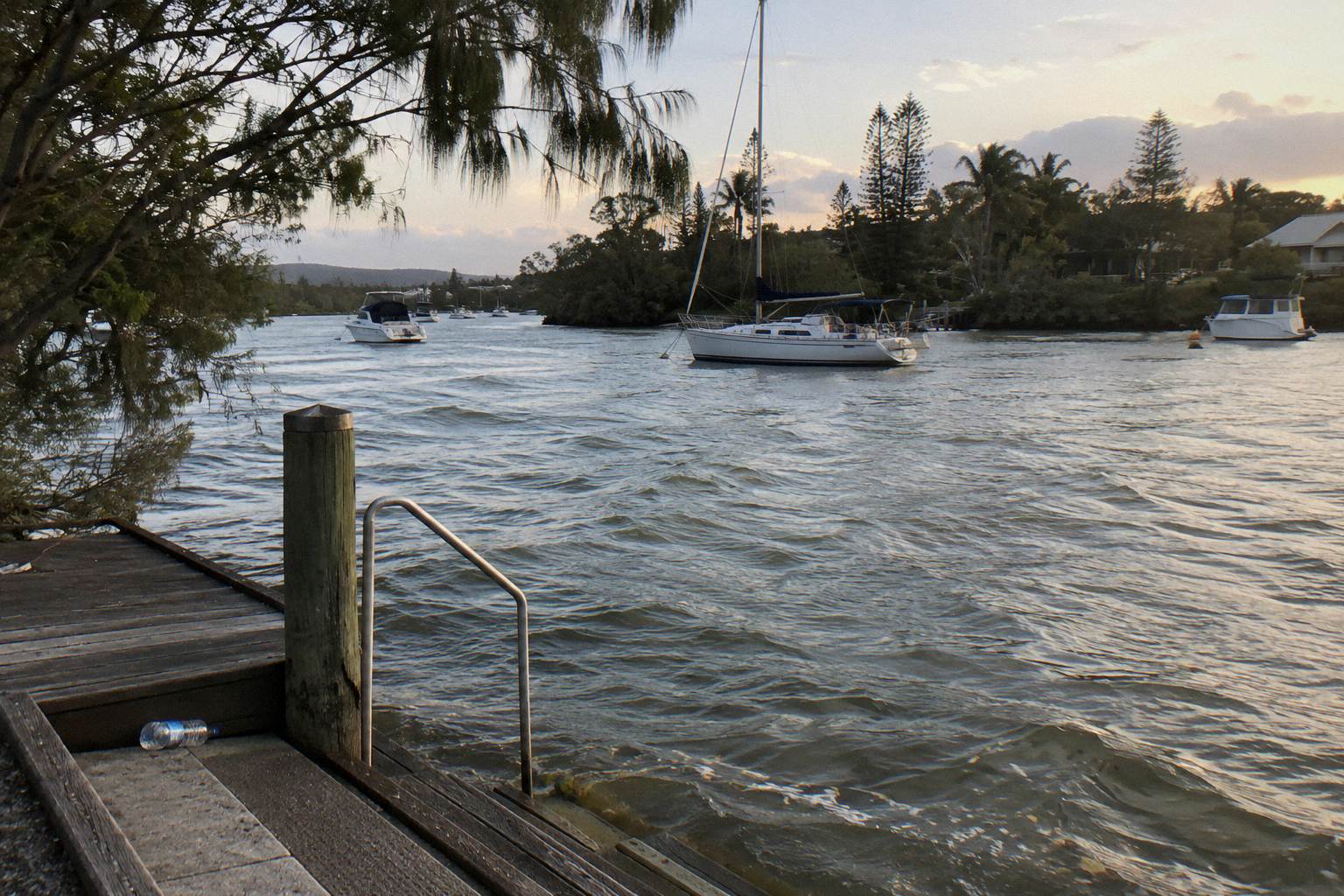
The sun sets over the Noosa River somewhere between about 5:03pm in June and about 6:45pm in January, a spread of nearly two hours that changes what time you board, what you wear and which cruise fits your day.
Short answer
Sunset in Noosaville ranges from about 5:03pm in mid-June to about 6:45pm in mid-January, shifting by under a minute most days. Queensland keeps UTC+10 all year with no daylight saving, so the shift is purely seasonal. Sunset cruises run 1 hour 45 minutes to 2.5 hours, so boarding falls well before the sunset time on the calendar.
Sunset on the Noosa River moves across the year by almost two hours, from about 5:03pm in the middle of June to about 6:45pm in the middle of January. That swing quietly rewrites your evening. A cruise that catches the last light over the water in winter starts while afternoon warmth still sits on the deck, while the same trip in summer begins close to the hour you might otherwise be heading to dinner. Getting the boarding time right means reading the real sunset, not the one you remember from your last Queensland holiday.
These times come from a solar calculation run for Noosaville, at latitude -26.396 and longitude 153.079, using the 15th of each month and rounding to the nearest minute or two. Queensland does not observe daylight saving, so the clock never jumps; only the earth's tilt moves the sunset. Pair those times with the Tewantin weather station's 31 years of temperature and rainfall means and you can plan a month, an outfit and a cruise length that all line up with the light you actually get.
The stakes are small in dollars but large in experience. Every cruise on the river carries free cancellation up to 24 hours before the start, so a misjudged booking costs you nothing but the rebooking effort. What no refund restores is the evening itself: a trip that boards ninety minutes after the sun has gone leaves you cruising in the dark past silhouetted banks, and a trip that boards too early spends its first hour in flat afternoon light. The month table below is the single tool that prevents both.
When Does The Sun Set In Noosa Each Month?
Sunset in Noosaville swings from about 5:03pm in June to about 6:45pm in January, with the shift spreading evenly across spring and autumn. Sunrise moves the same way, from about 4:49am in December to about 6:35am in July. The table below gives the mid-month figures for every month of the year, and each one is a calculation accurate to about a minute or two, not an official table.
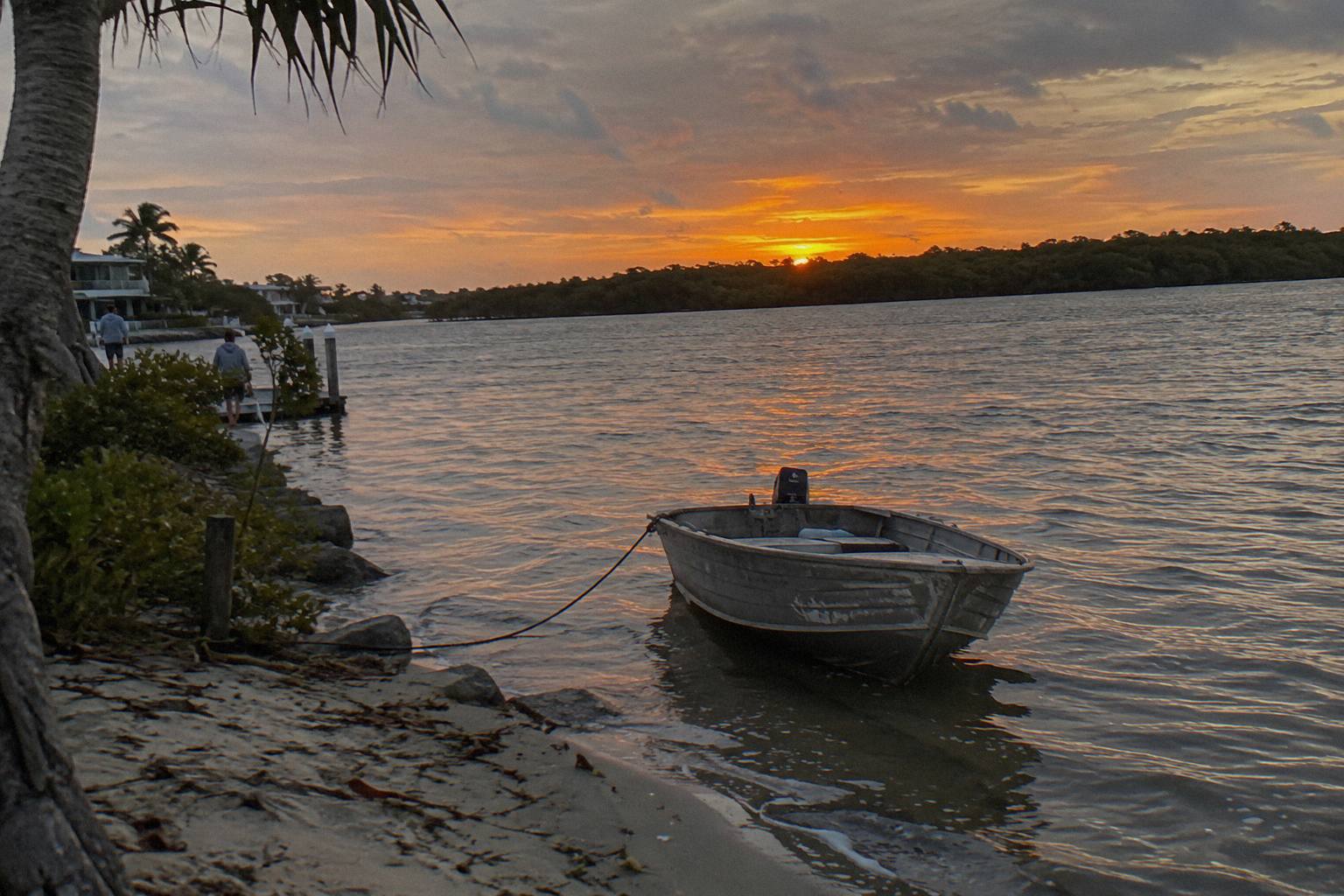
The pattern is symmetrical around the solstices. Mid-summer gives you about 13.6 hours of daylight in January and 13.8 in December, the longest stretch of the year. Mid-winter cuts that to about 10.5 hours in June and 10.6 in July. October and March sit close to the middle, each offering roughly half a day of light and sunsets a few minutes either side of 6pm.
| Month | Sunset (about) | Sunrise (about) | Daylight hours (about) |
|---|---|---|---|
| January | 6:45pm | 5:08am | 13.6 |
| February | 6:32pm | 5:32am | 13.0 |
| March | 6:06pm | 5:49am | 12.3 |
| April | 5:33pm | 6:03am | 11.5 |
| May | 5:09pm | 6:18am | 10.8 |
| June | 5:03pm | 6:33am | 10.5 |
| July | 5:12pm | 6:35am | 10.6 |
| August | 5:27pm | 6:18am | 11.2 |
| September | 5:40pm | 5:46am | 11.9 |
| October | 5:53pm | 5:13am | 12.7 |
| November | 6:14pm | 4:51am | 13.4 |
| December | 6:36pm | 4:49am | 13.8 |
Two practical details follow from the table. First, the day-to-day change is under a minute in most months, so a booking made for one weekend works almost exactly the same the next; you never need to re-plan within a fortnight. Second, December has the earliest mid-month sunrise, about 4:49am, worth knowing if you are staying on the river and wondering why the birds start before 5am.
A third detail is subtler: the sunset reaches its June floor weeks before the coldest nights arrive, and its December ceiling weeks before the hottest days. By late July the sunset has already started climbing back, about 5:12pm at mid-month against June's about 5:03pm, even though the mean minimum is still near its annual low. If you want the earliest possible boarding combined with the coldest, clearest evenings, the first half of July is where those two curves overlap on the river.
How Fast Does The Sunset Time Change Week To Week?
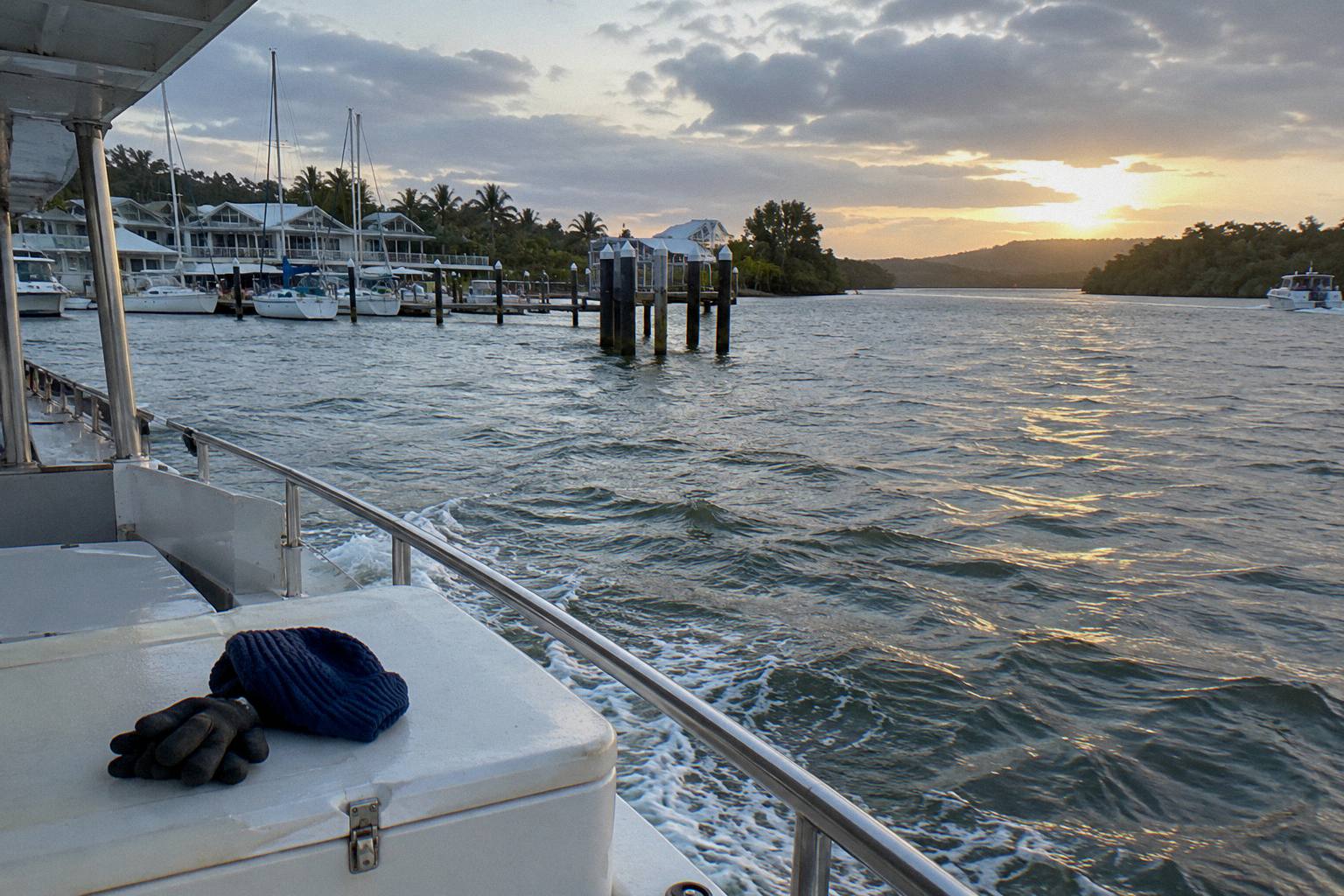
The sunset moves by less than a minute a day through most of the year, with the fastest shifts around a minute or so in late summer and late spring and near standstill at the June and December solstices. A sunset time you note this weekend stays accurate to within a few minutes a fortnight later, so planning does not need daily precision.
The slow drift means a cruise you book for mid-May will catch almost the same sunset you watched in early May. Where the change becomes noticeable is across a month: Mid-April's sunset of about 5:33pm is about half an hour earlier than mid-March's about 6:06pm, and it keeps sliding toward June's floor of about 5:03pm. Anyone booking three or four weeks ahead in autumn should expect the departure to sit noticeably earlier than a cruise they remember from the previous month.
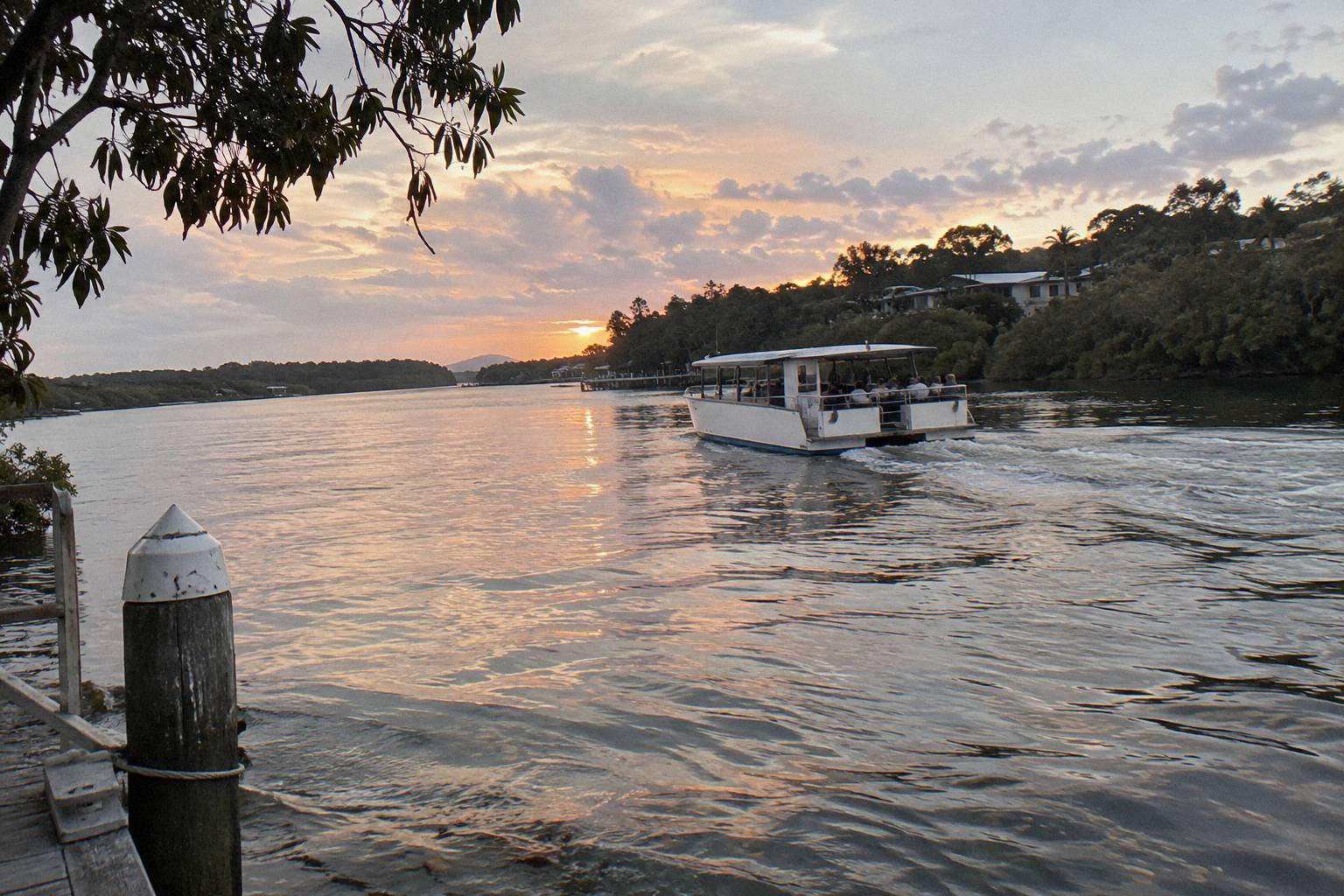
The floor and ceiling of the year are worth memorising. June's about 5:03pm is the earliest sunset; January's about 6:45pm is the latest. Everything else falls between them in a smooth curve, which makes it easy to estimate: if your trip falls between two months in the table, your sunset falls between the two times as well, to within a couple of minutes.
For travellers booking far ahead, the curve rewards a quick sanity check at the point of purchase. A departure slot that looks like late afternoon when you book it in March for a June trip may in fact be the correct seasonal time, because the boats track the light rather than the clock. Rather than second-guessing a slot against a summer memory, read the month from the table, subtract the cruise duration, and confirm the arithmetic leaves the sunset inside your time on the water.
If you are still weighing which evening trip suits your dates, these three cover the main formats on the river, from a long canal route to a boutique catamaran:
The key pairing is duration against daylight. The Noosaville Noosa River Sunset Cruise runs about 2.5 hours round trip from Noosaville, rated 4.7 from 263 reviews and from US$26 per person, so its departure sits further ahead of the sunset than a shorter trip would. The Noosa Queen Sunset River Cruise, rated 4.9 from 82 reviews and also from US$26, runs 1.5 hours and boards closer to the golden hour. The Stillwater Boutique Noosa Sunset Cruise, from US$40.45, runs 1 hour 45 minutes on the hybrid-electric HV Stillwater with a welcome drink and nibbles platter included. You can compare how each departure lines up with the seasonal shift in more detail in how the departure schedule changes across the year.
What Time Do Sunset Boats Actually Depart?
Sunset boats in Noosa depart well before the sunset itself, because their running time has to fit inside the remaining light. The only operator-published seasonal range is from 3:15pm on the shorter winter days up to 4:45pm on the longer summer days, stated by Noosa River and Canal Cruises for its sunset cruise; every other trip's start time is chosen on the booking calendar.
That published range belongs to one operator and one cruise; treat it as a guide to the shape of the year rather than a boat time for any other trip. The Noosa Queen departs daily with times that vary through the year, and the Stillwater, the day cruises and the Everglades trips all set their starts on the availability calendar. Whatever the month, the logic holds: the longer the cruise, the earlier the boarding.
| Cruise | Duration | Boarding point | What the duration means for timing |
|---|---|---|---|
| Noosaville Noosa River Sunset Cruise | About 2.5 hours round trip from Noosaville | 186 Gympie Terrace, Noosaville | The longest sunset trip, so the earliest relative boarding |
| Noosa Queen Sunset River Cruise | 1.5 hours | Noosa Marina, Tewantin | A shorter window that boards closest to the sunset hour |
| Stillwater Boutique Noosa Sunset Cruise | 1 hour 45 minutes | Noosa Marina, Tewantin or Pelican Boat Hire, Noosaville | Mid-length, with pickup point confirmed with the operator |
| Noosa River And Canals Day Cruise | 2 hours | 186 Gympie Terrace, Noosaville | A daytime route, so it follows daylight rather than sunset |
| Noosa Everglades Afternoon Cruise | 2.5 hours | Coach pickup chosen at booking | An afternoon trip north of the township, not tied to sunset |
Put the durations against the sunset table and the arithmetic is simple. A 2.5-hour round trip that wants sunset near its midpoint needs to leave roughly an hour or more before the sun goes down, which in June means an early-afternoon start and in January a late-afternoon one. That is exactly why one operator's range stretches from 3:15pm to 4:45pm across the seasons, as its own site explains for its sunset cruise.
The Noosaville Noosa River sunset cruise is the natural pick if you want that seasonal shift handled for you: the skipper's departure moves with the light, the route covers the river mouth and the canals, and guests are welcome to bring their own snacks alongside drinks purchased on board. For a fuller walk through the timing question, see what time to book a sunset boat in Noosa.
The Noosa Queen runs a different rhythm. Its 1.5-hour sunset cruise boards at Noosa Marina in Tewantin, 15 minutes before departure, and the operator asks guests to arrive early enough to register a number plate for the marina's 3 hours of free parking. With a fully licensed bar and live commentary on board, the shorter trip concentrates the golden hour rather than stretching across the whole afternoon.
Noosa Weather Month By Month: Heat, Rain And Evening Chill
Tewantin weather station's 31-year means show summer evenings near 22.0 °C at the January minimum and winter evenings near 11.3 °C at the July minimum, so the same sunset cruise needs a jumper in one month and nothing but a shirt in another. February and March are the wettest months, with 232.7mm and 241.3mm of mean rainfall, while July to September are the driest.
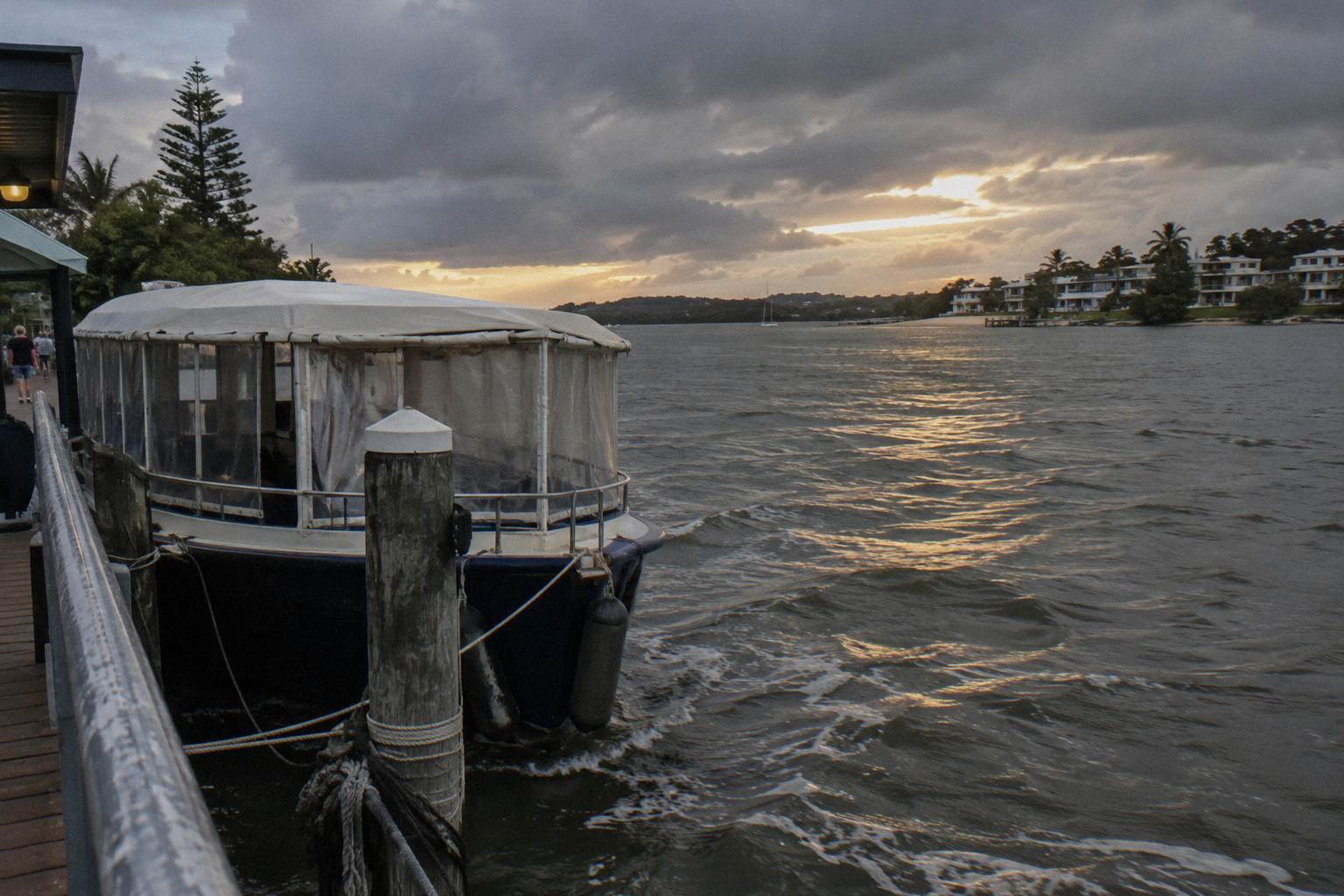
The temperature band matters on the water more than on land. A July evening cruise with the boat moving upriver cools quickly once the sun drops at about 5:12pm, and the July mean minimum of 11.3 °C is the figure the operator's advice about layers and a light jacket is built for. In January the mean minimum sits at 22.0 °C and the mean maximum at 28.7 °C, so the first half of the cruise can feel like the warmest part of the day.
| Month | Mean max (C) | Mean min (C) | Mean rainfall (mm) | Rain days of 1mm or more |
|---|---|---|---|---|
| January | 28.7 | 22.0 | 149.8 | 10.7 |
| February | 28.6 | 22.0 | 232.7 | 12.6 |
| March | 27.7 | 20.9 | 241.3 | 14.3 |
| April | 26.0 | 18.2 | 151.7 | 11.6 |
| May | 23.7 | 15.0 | 162.2 | 10.7 |
| June | 21.7 | 12.6 | 110.6 | 8.8 |
| July | 21.4 | 11.3 | 70.6 | 7.2 |
| August | 22.5 | 11.8 | 77.8 | 5.7 |
| September | 24.4 | 14.6 | 58.0 | 6.0 |
| October | 25.7 | 17.1 | 120.8 | 8.2 |
| November | 26.9 | 18.9 | 99.0 | 8.0 |
| December | 28.2 | 20.8 | 147.4 | 9.8 |
Read the rain columns as long-run averages, not forecasts: March averages 14.3 days of rain at 1mm or more, the highest of the year, yet plenty of March evenings stay dry. The driest stretch runs July through September, with September the driest month of all at 58.0mm and 6.0 rain days on average. The Bureau of Meteorology publishes the full station record for Tewantin RSL Park, the closest station to the river.
The shoulder months deserve a second look from anyone flexible on dates. May pairs a 15.0 °C mean minimum with a 5:09pm sunset and only 10.7 rain days, and October offers a 17.1 °C mean minimum against a 5:53pm sunset, both comfortably inside the operating comfort zone with a light jacket. Neither month carries the summer crowds' peak heat, and both sit far enough from the February and March rainfall peaks that a dry evening is the more likely outcome of any single booking.
Wind follows its own seasonal shape. Mean 3pm wind at the same station runs strongest in the warmer months, from 19.1 km/h in January to 19.7 km/h in October and December, and lightest in June at 11.9 km/h. Every trip states free cancellation up to 24 hours before the start for a full refund; the Noosa Queen operator adds that it refunds in full if it cancels for severe weather. If a storm looks likely for your date, how wind and weather affect sunset boats covers what is known.
Matching Cruise Length To The Daylight You Have
The three evening cruises run 1.5 hours, 1 hour 45 minutes and about 2.5 hours, and daylight runs from about 10.5 hours in June to about 13.8 in December, so the shortest days still hold any evening trip with room to spare. The real constraint is not total daylight but where your cruise sits inside it, which is why boarding times move with the seasons.
A useful planning habit: take the month's sunset time from the first table, subtract the cruise duration, and treat the result as a rough target for when the boat needs to leave the jetty. In December, with sunset about 6:36pm, a 1.5-hour Noosa Queen trip boards comfortably in the late afternoon. In June, with sunset about 5:03pm, the same trip needs a mid-afternoon start, and the 2.5-hour Noosaville cruise needs to leave while it still reads like a school-pickup hour.
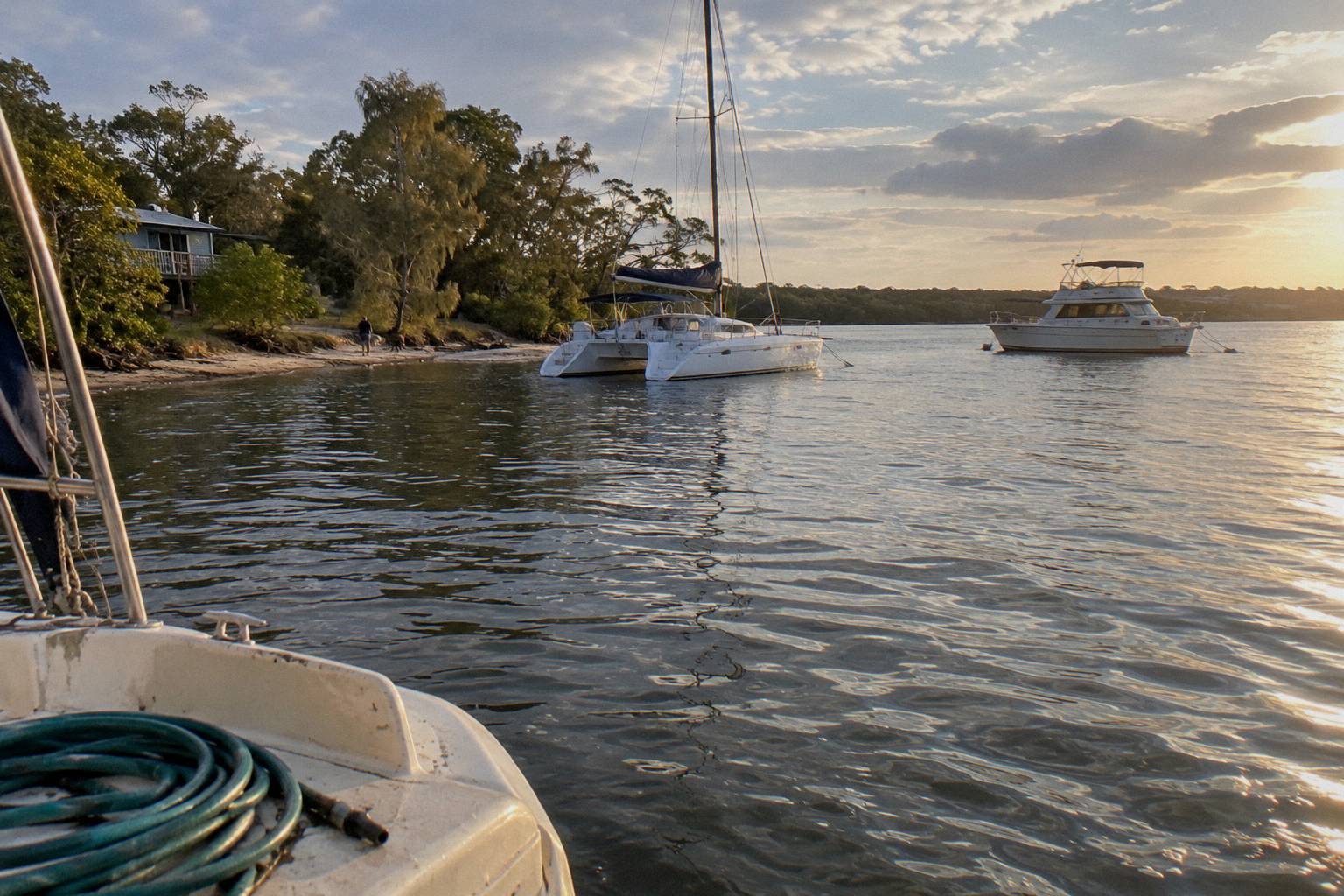
Daylight trips play by the same table in reverse. The Noosa River And Canals Day Cruise runs 2 hours from the Gympie Terrace jetty from US$26 per person, covering the canals in full light, and it suits the short June days when the evening window feels thin. Its sunset sister trip covers the same water later in the day; the choice comes down to whether you want canals in sunshine or the river mouth as the light drops.
For the boutique end of the evening options, the Stillwater Boutique Noosa Sunset Cruise boards up to 40 guests on the hybrid-electric HV Stillwater and travels upriver to the entrance of Lake Cooroibah for the sunset itself, with a welcome drink and a shared light nibbles platter included. Its 1 hour 45 minutes sits neatly between the two longer-established trips, long enough to reach the lake entrance and short enough that boarding stays close to the golden hour.
If your dates are fixed by school holidays or a wedding, work the tables backwards. A July visit gives you the earliest sunsets and the coldest evenings, so a 1.5 or 1 hour 45 minute trip with indoor saloon seating, like the Noosa Queen's multi-deck layout, keeps the chill optional. A December visit gives you a 6:36pm sunset and a 20.8 °C mean minimum, which suits the longer Noosaville round trip, when the canals and the river mouth fill most of a warm evening.
There is also the question of where you want the sunset to fall inside the trip. Some travellers prefer to board with full light, watch the colour build over the whole journey and dock in the dark; others would rather spend the first hour in daylight at the marina and time the cruise so the sunset lands near the turn back. The Noosa Queen's 1.5 hours and the Stillwater's 1 hour 45 minutes both favour the second style, while the Noosaville round trip's about 2.5 hours gives the colour time to develop and fade before the jetty appears again.
Does Daylight Saving Change Noosa Sunset Times?
No. Queensland stays on UTC+10 all year and does not observe daylight saving, so the sunset times in the table above are the same on the clock in every week of the year's cycle; only the season moves them. Visitors from New South Wales and Victoria lose an hour crossing the border in summer, which matters for arrival times but not for the sunset itself.
That border difference catches people every summer. During the southern daylight saving months, Noosa sits an hour behind Sydney and Melbourne, so a 6:45pm January sunset in Noosaville is 7:45pm on your home clock. Booked departure times are always given in Queensland time, and the simplest guard is to set your phone's clock to automatic so it shifts as you cross the state line.
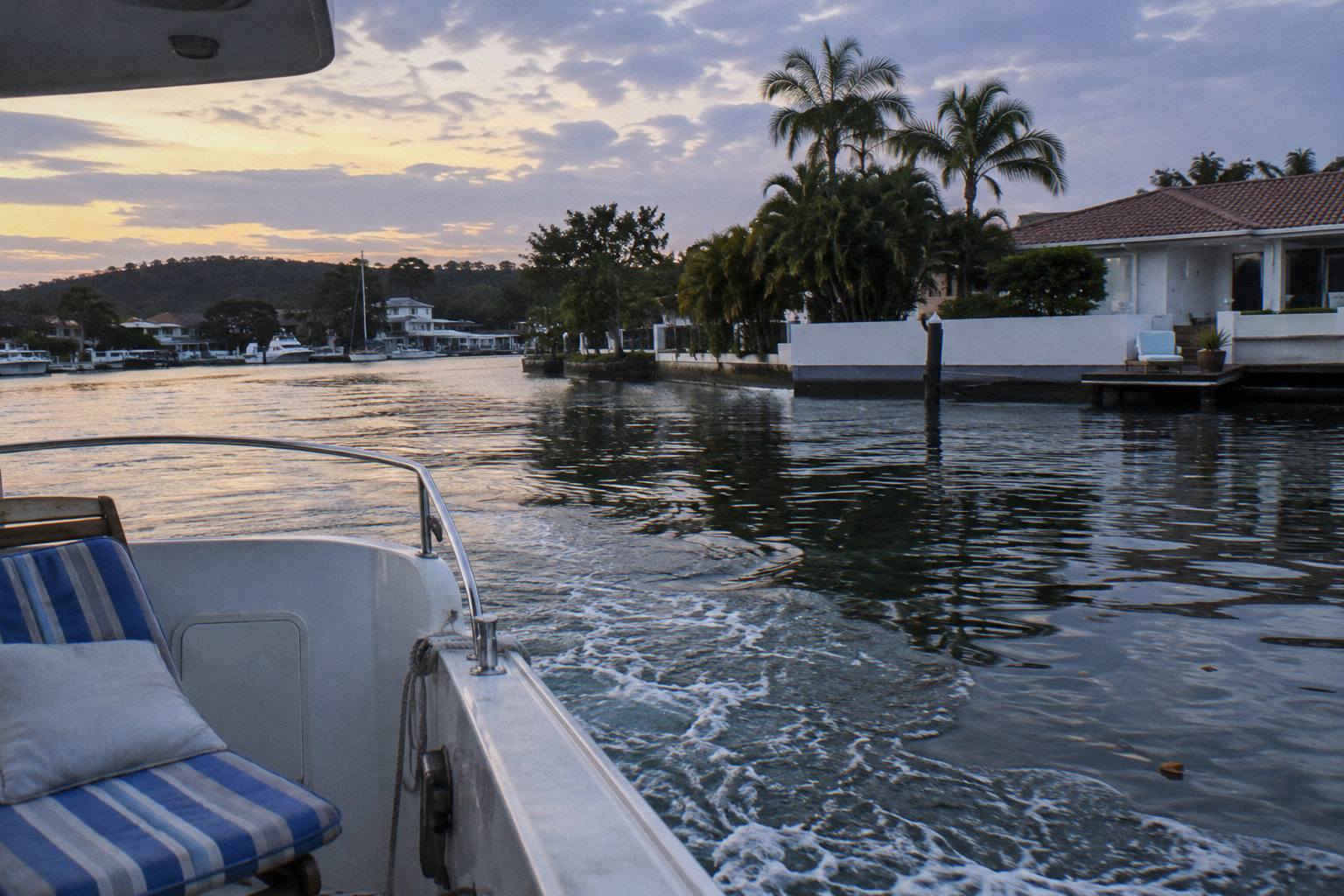
The other follow-on is for photographers. With no daylight saving, the golden hour in December runs from roughly 5:45pm toward the about 6:36pm sunset, earlier than many visitors expect. Anyone planning to shoot from the water can pair the month table with photographing the sunset from a Noosa boat to be on deck at the right minute rather than arriving as the colour fades.
Common Mistakes When Planning Around A Noosa Sunset
The recurring mistakes are assuming a summer departure time still works in winter, booking a 2.5-hour trip against a June sunset and boarding in the dark's approach, dressing for the daytime maximum rather than the evening minimum, and forgetting that Queensland's clock never changes. Each one is avoidable with the month table and a five-minute subtraction.
| Mistake | Why it happens | The fix |
|---|---|---|
| Booking a summer time for a winter trip | The same cruise departs more than an hour earlier in June than in January | Check the month's sunset figure before choosing a slot |
| Dressing for the daytime temperature | A 25.7 °C October maximum hides a 17.1 °C mean minimum on the water | Bring layers and a light jacket, as the Noosa Queen operator advises |
| Expecting daylight saving hours | Visitors assume Queensland matches the southern states | Queensland stays on UTC+10 all year |
| Arriving at the jetty at departure time | The Noosa Queen asks guests to arrive 15 minutes early, with parking to register | Build in parking plus the 15-minute buffer at Noosa Marina |
| Assuming rain ruins the month | February and March look wet in the averages | Those figures are 31-year means; individual evenings vary widely |
One more mistake deserves its own line: trusting a departure time from a review or a friend's trip taken in a different season. Because the sunset slides by nearly two hours across the year and the boats follow it, a departure quoted for one month is quietly wrong three months later. The Noosa Sunset Cruises season pages keep the pairing between the light and the boats front and centre so you never book against a stale time.
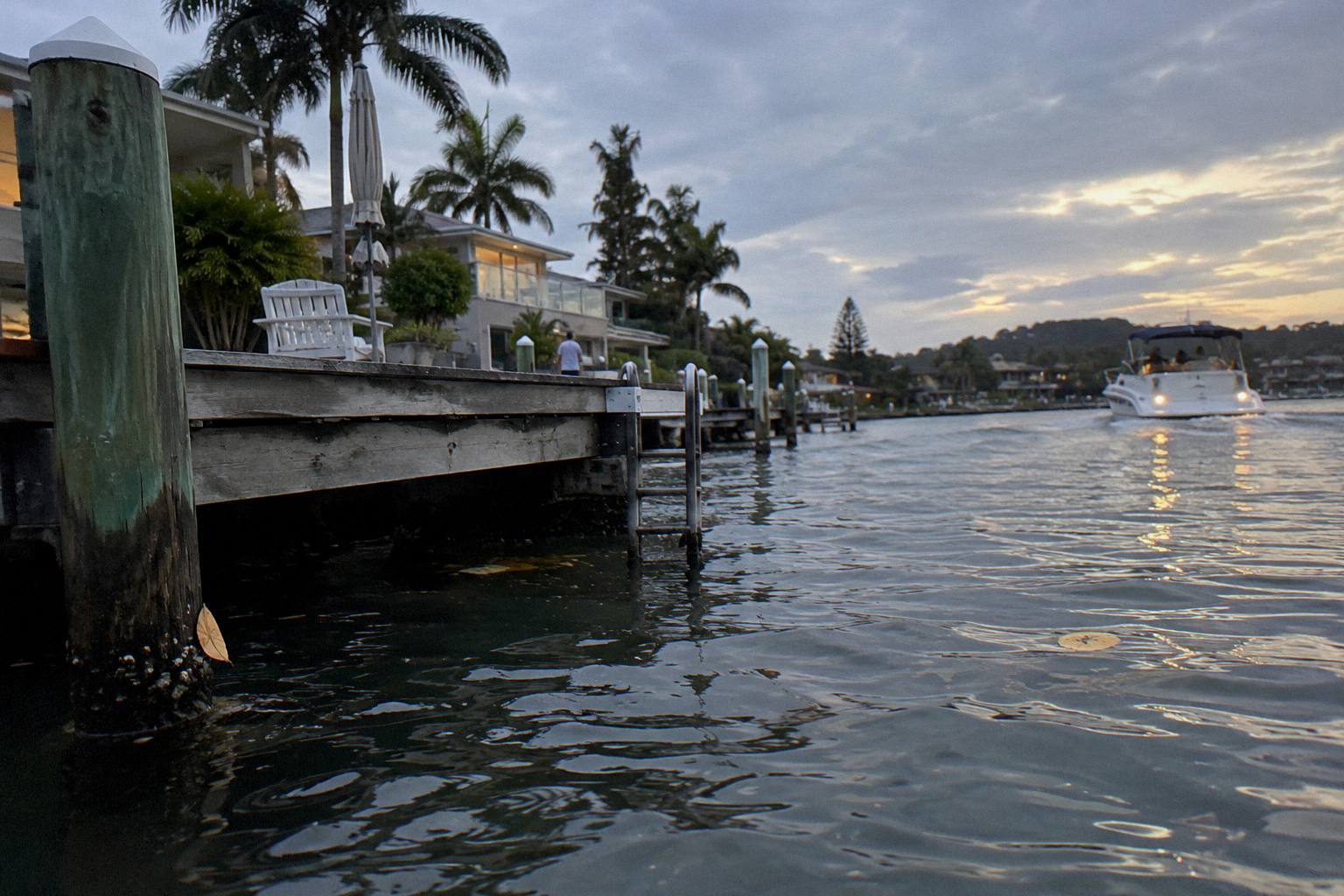
Winter trips, by the way, are far from a consolation prize. The about 5:03pm June sunset means you are back at the jetty by early evening with the whole night ahead, the driest months of the year sit in July through September, and the mean 3pm wind drops to its yearly low of 11.9 km/h in June. If you are weighing the two halves of the year, summer versus winter evenings on the river and whether the boats run in winter settle the question with facts rather than instinct.
Common Questions About Sunset Times In Noosa
What Time Is Sunset In Noosa In Each Month?
Sunset runs from about 6:45pm in January to about 5:03pm in June, moving through about 6:06pm in March, 5:33pm in April, 5:09pm in May, 5:12pm in July, 5:27pm in August, 5:40pm in September, 5:53pm in October, 6:14pm in November and 6:36pm in December. The figures are mid-month calculations accurate to about a minute or two.
How Early Do Sunset Boats Leave Before The Actual Sunset?
It depends on the cruise length. The Noosa Queen runs 1.5 hours, the Stillwater 1 hour 45 minutes and the Noosaville cruise about 2.5 hours round trip, so the longer trips board furthest ahead of the sunset. One operator publishes its seasonal departure range, from 3:15pm in winter up to 4:45pm in summer; all other start times are chosen on the booking calendar.
Does Queensland Have Daylight Saving?
No. Queensland stays on UTC+10 all year. In summer, Noosa sits an hour behind New South Wales and Victoria, so booked departure times always use Queensland time.
Which Months Have The Most Rain In Noosa?
February and March are the wettest at the Tewantin weather station, averaging 232.7mm and 241.3mm respectively, with March also the month of most rain days at 14.3. The driest stretch runs July to September, with September the driest at 58.0mm.
How Cold Do Evening Cruises Get In Winter?
The Tewantin July mean minimum is 11.3 °C and June's is 12.6 °C, against summer minimums around 22.0 °C. The Noosa Queen operator recommends comfortable clothes in layers with a light jacket or jumper, and on the water that advice applies even on days that felt warm at lunchtime.