
Photographing Sunset From A Boat On The Noosa River
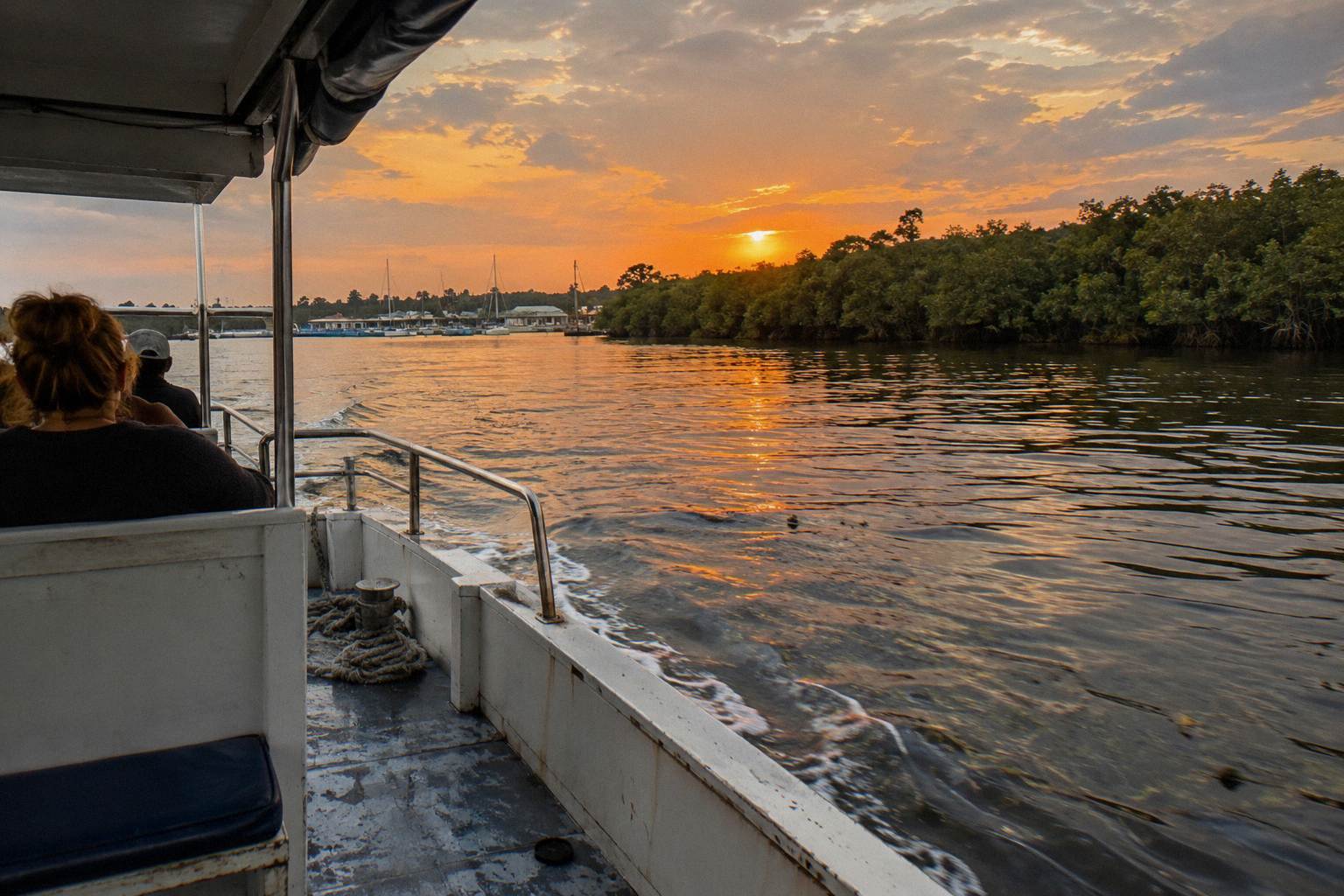
Sunset on the Noosa River moves almost an hour and a half across the year, and the light you get depends on when you board, which boat you pick and where you stand. Here is how the timing, routes and vessels fit together for photography.
Short answer
Sunset at Noosaville ranges from about 5:03pm in June to about 6:45pm in January, a swing that shapes every departure. Three evening cruises cover different water: the Noosa Queen (1.5 hours, from US$26 per person), the Noosaville cruise (2.5 hours, from US$26) and the Stillwater catamaran (1 hour 45 minutes, from US$40.45). Pick the route first, then time the calendar.
The sun sets over the Noosa River at wildly different hours depending on the month, about 5:03pm in the middle of June and about 6:45pm in the middle of January. That hour and a half of swing is the single most useful planning fact a photographer has, because it changes what time you board, how much golden light you get before the colour fades and how cold you will be standing on an open deck waiting for it. Queensland keeps one time zone year round with no daylight saving, so the seasonal shift lands entirely on the calendar.
The river itself is smooth, sheltered water, which matters more than any camera specification. The boats that run evening trips here operate in calm conditions, the routes pass close to mangrove-lined shores, a privately owned island and the North Shore ferry crossing, and the water carries reflections without the chop you would fight on an open coastline. Every cruise in the sunset family includes live commentary or a skipper on the mic, which is worth knowing before you settle into a long exposure.
Why The Noosa River Suits Sunset Photography
The Noosa River gives photographers three things most sunset locations cannot: sheltered reflective water, a horizon broken by silhouetted headlands and mangroves, and boats that position you mid-river at the exact hour the light drops. Unlike a beach, you can hold a steady frame while the sky changes, and the water doubles every colour above it.
The upper river runs west and northwest towards Lake Cooroibah, which is the direction the sun goes down, so the working part of these routes faces the light rather than turning away from it. The Noosa Queen travels from Noosa Marina past Makepeace Island, a privately owned island with dense tree cover that makes a strong near silhouette, and on towards Lake Cooroibah. The Stillwater cruise heads upriver to the entrance of the same lake for its sunset views. The Noosaville cruise works the lower river and canals, where the operator names the river mouth and mountain views among the sights, with skipper commentary pointing out local wildlife along the way.
Reflection is the quiet advantage. Because the water is smooth and the boats move slowly, the river surface behaves like a mirror in the last twenty minutes before the sun drops, especially in the quieter stretches away from boat traffic. Foregrounds are what separate a postcard from a photograph, and the river supplies them constantly: ferry cable crossings, jetty pylons at Noosaville, overhanging trees along the canal banks, birdlife resting on the water.
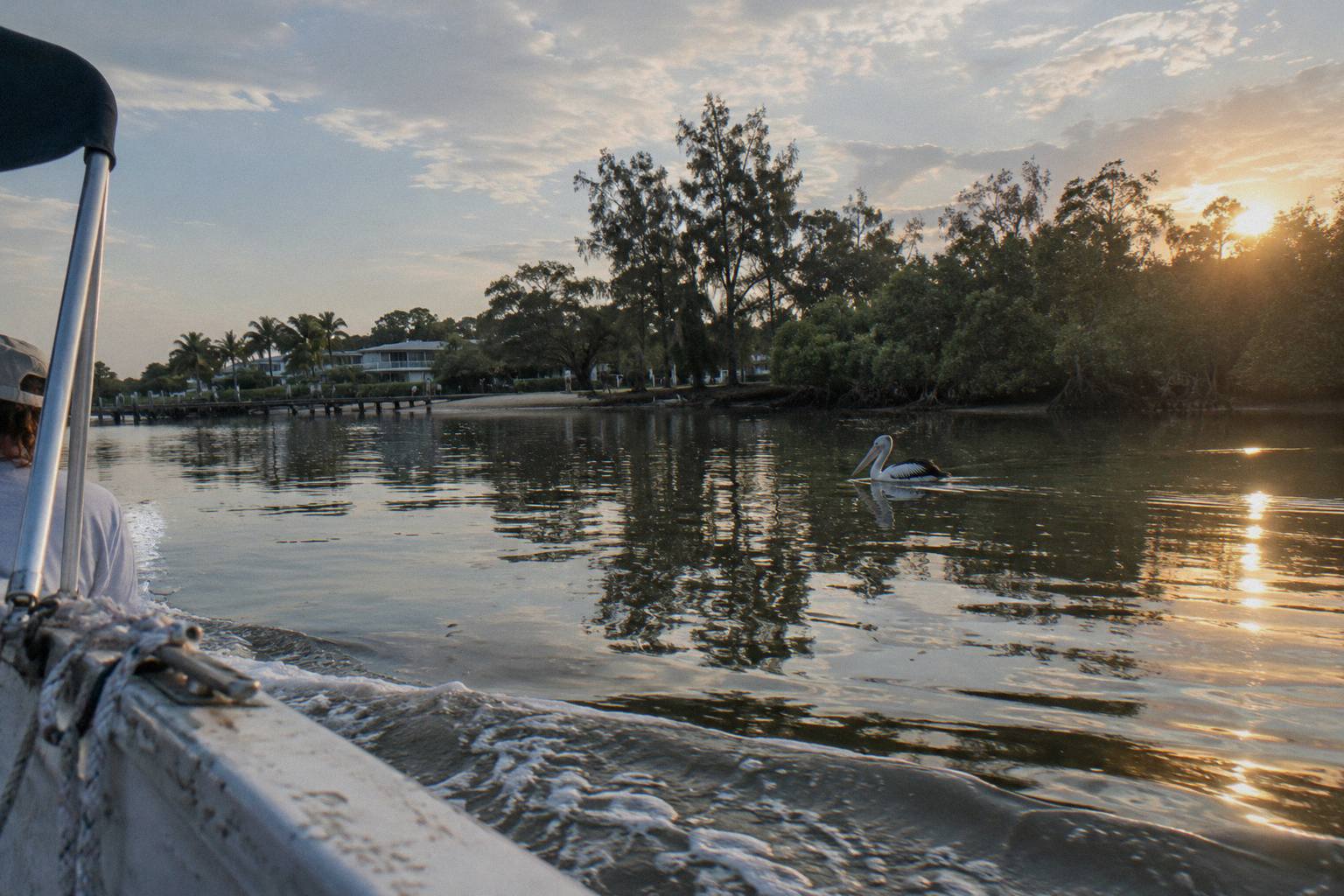
One more practical point in the river's favour: you are never fighting for position with a crowd on a cliff edge. The Noosa Queen takes up to 65 guests on a multi-decked vessel with open forward, aft and upper decks, which means multiple sightlines at multiple heights, and the Stillwater carries up to 40 on a boutique catamaran. Space to move, brace and reframe is a genuine photographic asset. If you are weighing the overall experience against the cost, our piece on whether a sunset boat is worth it works through the value question in plain terms.
When The Sun Sets: The Monthly Clock
Sunset at Noosaville swings from about 5:03pm in June to about 6:45pm in January, computed for latitude -26.396 on the 15th of each month and accurate to within about two minutes. Daylight hours shrink to about 10.5 in June and stretch to about 13.8 in December. Book your cruise by working backwards from these times, not from a fixed clock habit.
The table below is the core planning tool. Remember it is a solar calculation, not a boat time: your actual departure depends on the operator's seasonal schedule, which you choose on the booking calendar. Noosa River and Canal Cruises publishes the only seasonal clock range of the group, from 3:15pm through the shorter winter days up to 4:45pm on the longer summer days for its own sunset cruise, a spread that tracks the sunset table almost exactly.
| Month | Sunset (about) | Daylight hours (about) |
|---|---|---|
| January | 6:45pm | 13.6 |
| February | 6:32pm | 13.0 |
| March | 6:06pm | 12.3 |
| April | 5:33pm | 11.5 |
| May | 5:09pm | 10.8 |
| June | 5:03pm | 10.5 |
| July | 5:12pm | 10.6 |
| August | 5:27pm | 11.2 |
| September | 5:40pm | 11.9 |
| October | 5:53pm | 12.7 |
| November | 6:14pm | 13.4 |
| December | 6:36pm | 13.8 |
The day-to-day change is under a minute in most months, so a booking made for mid-month holds true for the whole month in practical terms. The two inflection points are April, when sunset pulls back roughly 33 minutes from March across the month, and September to October, when it slides out again towards summer. Photographers chasing a specific mood should note that the earliest and latest sunsets land close to the solstices, and everything in between moves steadily.
A longer treatment of the seasonal clock, including sunrise and how it interacts with cruise departures, sits in our month by month sunset times guide. For booking strategy specifically, the question of how early to lock in a date is covered separately in whether you need to book a Noosa sunset boat in advance.
Which Boat And Route For The Shot You Want
Match the vessel to your subject. The Noosa Queen (1.5 hours, from US$26) offers multi-deck height and open air for wide river frames, the Noosaville cruise (2.5 hours, from US$26) gives the longest window plus canals and river mouth views, and the Stillwater catamaran (1 hour 45 minutes, from US$40.45) is a boutique hybrid-electric boat of up to 40 guests with a welcome drink included.
The Noosa Queen is the height play. A multi-decked motor vessel with a saloon deck, open forward, aft and upper decks, it lets you shoot from an elevated angle over the water, which compresses the reflection and keeps the horizon clean. Its route from Noosa Marina past Makepeace Island towards Lake Cooroibah passes a privately owned island close enough to use as a dominant silhouette. Duration is 1.5 hours, tight but well matched to the last light if departure lines up with the seasonal sunset table. Some guests mention blankets and laid-back music on board, though neither is a listed inclusion.
| Cruise | Duration | From (US dollars) | Boarding point | Photographic strength |
|---|---|---|---|---|
| Noosa Queen Sunset River Cruise | 1.5 hours | US$26 | Noosa Marina, Tewantin | Multi-deck elevation, open decks, up to 65 guests |
| Noosaville Noosa River Sunset Cruise | 2.5 hours round trip | US$26 | 186 Gympie Terrace, Noosaville | Longest window, canals, river mouth and mountain views |
| Stillwater Boutique Noosa Sunset Cruise | 1 hour 45 minutes | US$40.45 | Noosa Marina or Pelican Boat Hire | Boutique catamaran, up to 40 guests, Lake Cooroibah entrance |
The Noosaville cruise is the time play. At about 2.5 hours round trip from Noosaville, it is the longest evening on the water of the three, which means more positions, more light phases and more chances at wildlife along the canals. The operator names the river mouth, mountain views and local wildlife among its sights, with live skipper commentary throughout. Guests are welcome to bring their own snacks, drinks are for purchase at the licensed venue on board, and BYO alcohol is not permitted. You can check the Noosaville sunset cruise details alongside 2.5-Hour Cruise, BYO Snacks when you are ready to compare dates.
The Stillwater Boutique cruise is the quiet play. The hybrid-electric HV Stillwater carries up to 40 guests for about 1 hour 45 minutes, goes upriver to the entrance of Lake Cooroibah for sunset views, and includes a welcome drink, alcoholic or non-alcoholic, plus a shared light nibbles platter, with further drinks for purchase. Boarding is at Noosa Marina in Tewantin or Pelican Boat Hire in Noosaville, and you confirm the pickup point and time with the operator. A smaller boat with wide aisles and a fully accessible toilet also means easier movement between sides while you work the light.
For photographers whose real interest is the canals at dusk, the daytime option deserves a look too: the river and canals day cruise runs 2 hours from the same Gympie Terrace jetty from US$26 per person, and while it is not an evening trip, it covers the canal architecture and wildlife the sunset route also passes.
Where To Sit, And Which Side Of The Boat
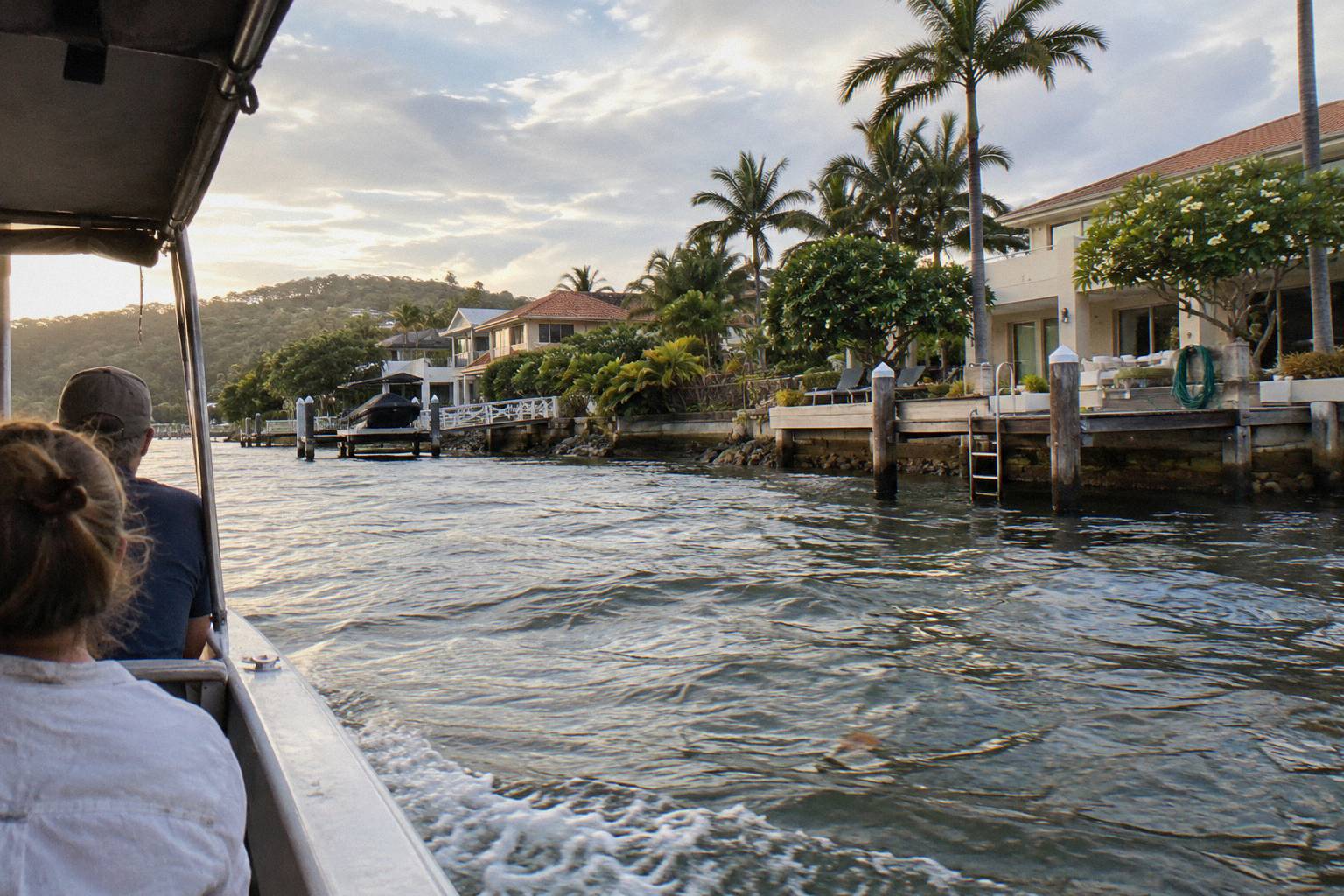
No side of the boat is the sunset side, so treat side as a changing variable, not a fixed answer. The river bends, the boat turns at the head of the route and the sun's azimuth shifts with the season, which means the shooting side swaps several times on any single trip.
What actually matters is mobility and elevation. On the Noosa Queen, the open upper deck gives the cleanest sightlines over railings and other guests, while the forward and aft open decks put you lower and closer to the water for stronger reflections. Boats generally travel slowly, so hand-held shooting is practical from any of them. Move early: the ten minutes before the sun touches the horizon is when everyone decides they want the rail, and the boat is often steadier near the centre of a deck than at its corners.
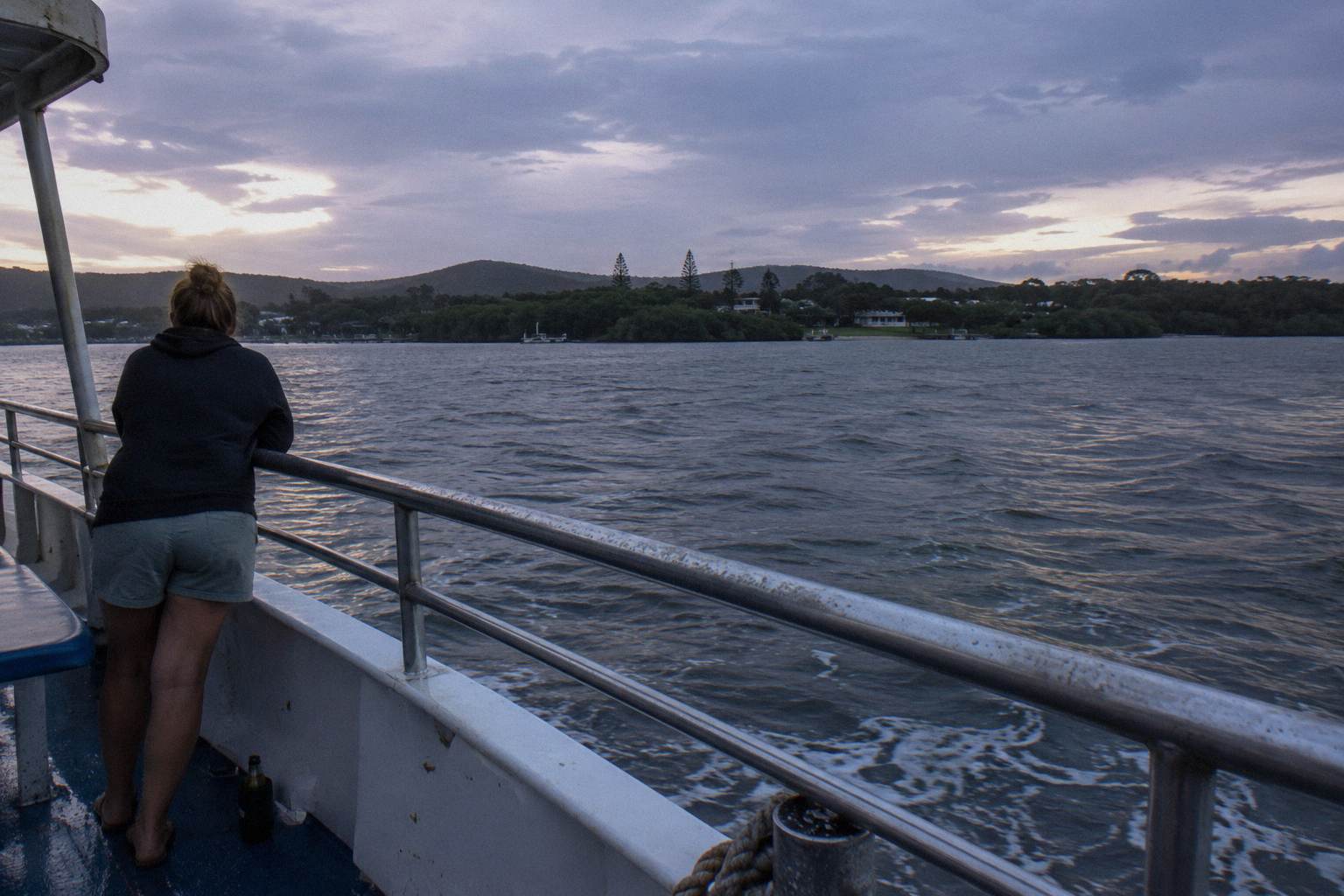
Route geometry helps you predict the light. The Noosa Queen and Stillwater both head upriver towards Lake Cooroibah, broadly westwards, so on the outbound leg the sun sits ahead or to the beam; the Noosaville cruise works the lower river, canals and the direction of the river mouth, where mountain silhouettes give the sky scale. Because these boats turn around and return, you will get both backlit and front-lit versions of the same shore on one trip. For a deeper discussion of sightlines and angles, see our blog post on which side of the boat has the best sunset view.
What To Pack And Wear For A Sunset Shoot
The Noosa Queen operator recommends comfortable clothes in layers and a light jacket or jumper, and evening air in Tewantin averages a mean minimum of 11.3 °C in July against 22.0 °C in January, so winter shoots need real warmth. Beyond clothing, keep gear minimal, hands free and batteries warm; no operator lists photography equipment rules, so travel light and ask when booking.
Layers are not a suggestion in winter. A 5pm June sunset means boarding in air that can already be in the low teens, and standing still on a moving deck feels colder than walking. Gloves that let you work controls, a jacket pocket for a spare battery (cold drains them) and closed shoes for a wet deck are the practical core. In summer the same advice inverts: light layers, because January evenings stay warm and the light lasts until almost 7pm.
| Season | Mean min (Tewantin) | Mean max | What to wear on deck |
|---|---|---|---|
| Summer (Dec-Feb) | 20.8 to 22.0 °C | 28.2 to 28.7 °C | Light layers, breathable shirt |
| Autumn (Mar-May) | 15.0 to 20.9 °C | 23.7 to 27.7 °C | Layers plus a light jacket |
| Winter (Jun-Aug) | 11.3 to 12.6 °C | 21.4 to 21.7 °C | Warm jacket, jumper, gloves |
| Spring (Sep-Nov) | 14.6 to 18.9 °C | 24.4 to 26.9 °C | Layers, jacket for after sunset |
Small snacks are welcome on the Noosa Queen, guests may bring their own snacks and meals on the Noosaville cruise, and the Stillwater includes a welcome drink and nibbles platter, so food logistics are easy. Cards and cash are accepted on board the Noosa Queen if you want a drink from its licensed bar mid-shoot. The climate means come from the Tewantin weather station's 31-year averages, the closest long-run record to the river; the Bureau of Meteorology table is at cw_040908. For clothing advice framed around comfort rather than photography, our post on what to wear on a sunset cruise covers the same ground for general passengers.
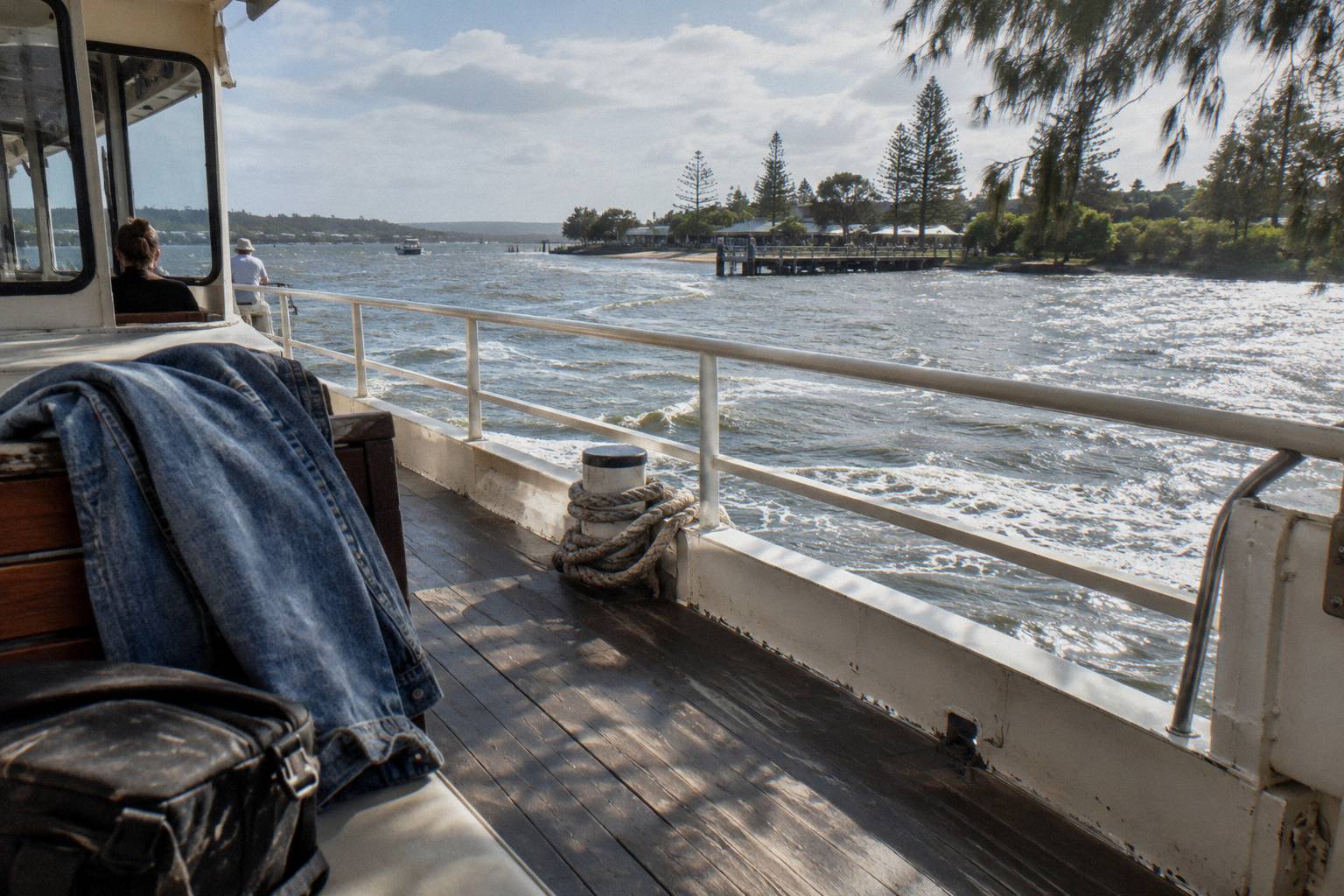
A clean lens beats almost everything else. River air carries fine moisture, a fingerprint on a front element turns every light source into a soft blob, and there is nowhere to properly clean glass on a moving deck. Check the sky before you leave as well: the driest months at Tewantin are July through September, while February and March are the wettest, with mean rainfall of 232.7mm and 241.3mm respectively. Weather decisions and what happens if conditions turn are covered in our wind, weather and cancellations guide.
Wildlife And Landmarks Worth Framing
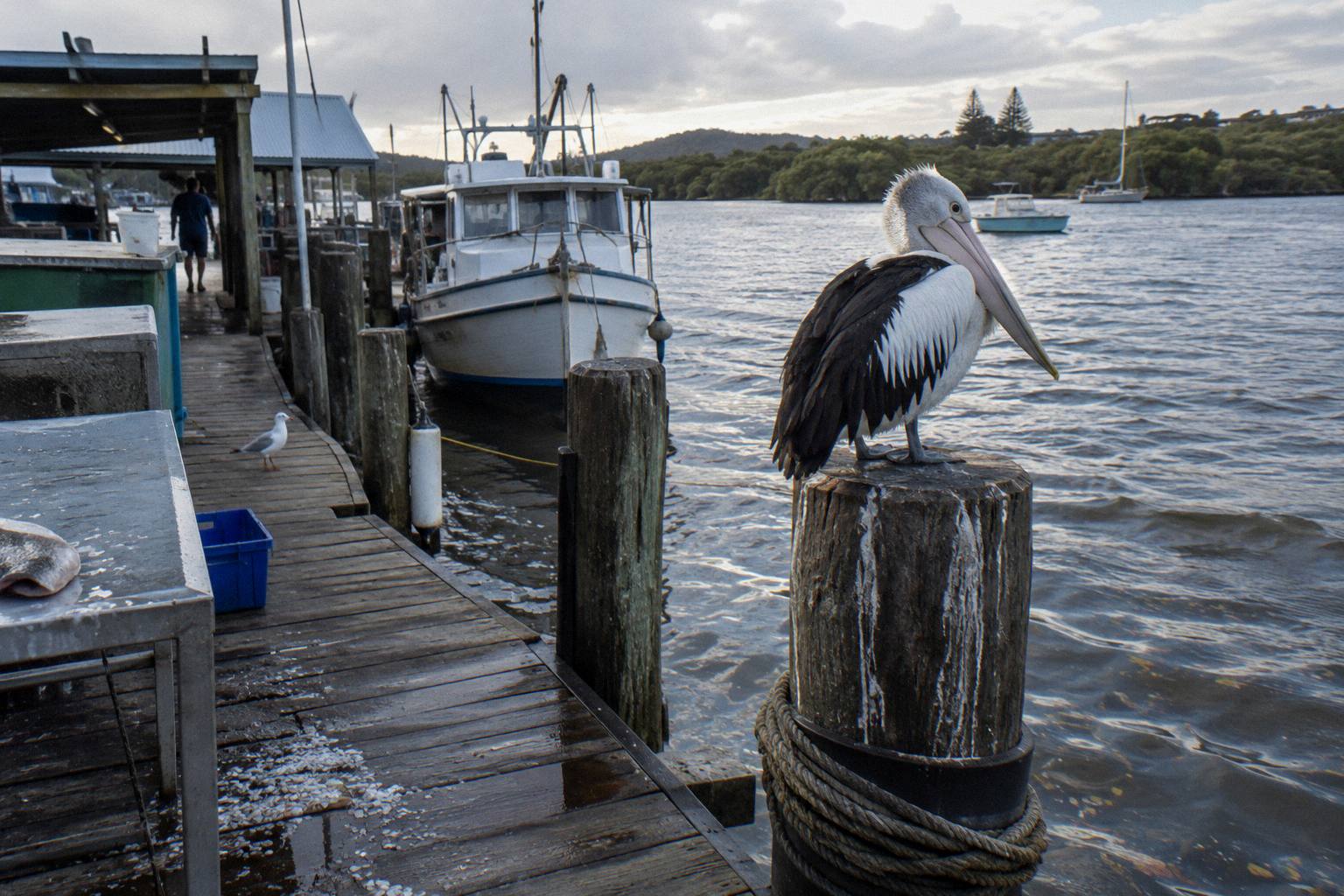
The Noosa Queen operator says guests often spot Whistling Kite, Australian Pelican, Great Egret, Pied Cormorant and Azure Kingfisher, and lists a chance to spot kangaroos; the Noosaville cruise's skipper commentary points out local wildlife as it appears. None of this is promised, so shoot wildlife opportunistically and keep a second camera or a quick lens change ready.
Bird photography on the river rewards patience and a long lens. Pelicans and cormorants perch on jetty structures and channel markers near Noosaville, egrets work the shallows along the mangroves, and an Azure Kingfisher is a small, fast, orange-and-blue prize that usually gives you a second of warning at most. The operators attribute these sightings to their own experience on the water, which is exactly the right way to read them: likely, not guaranteed.
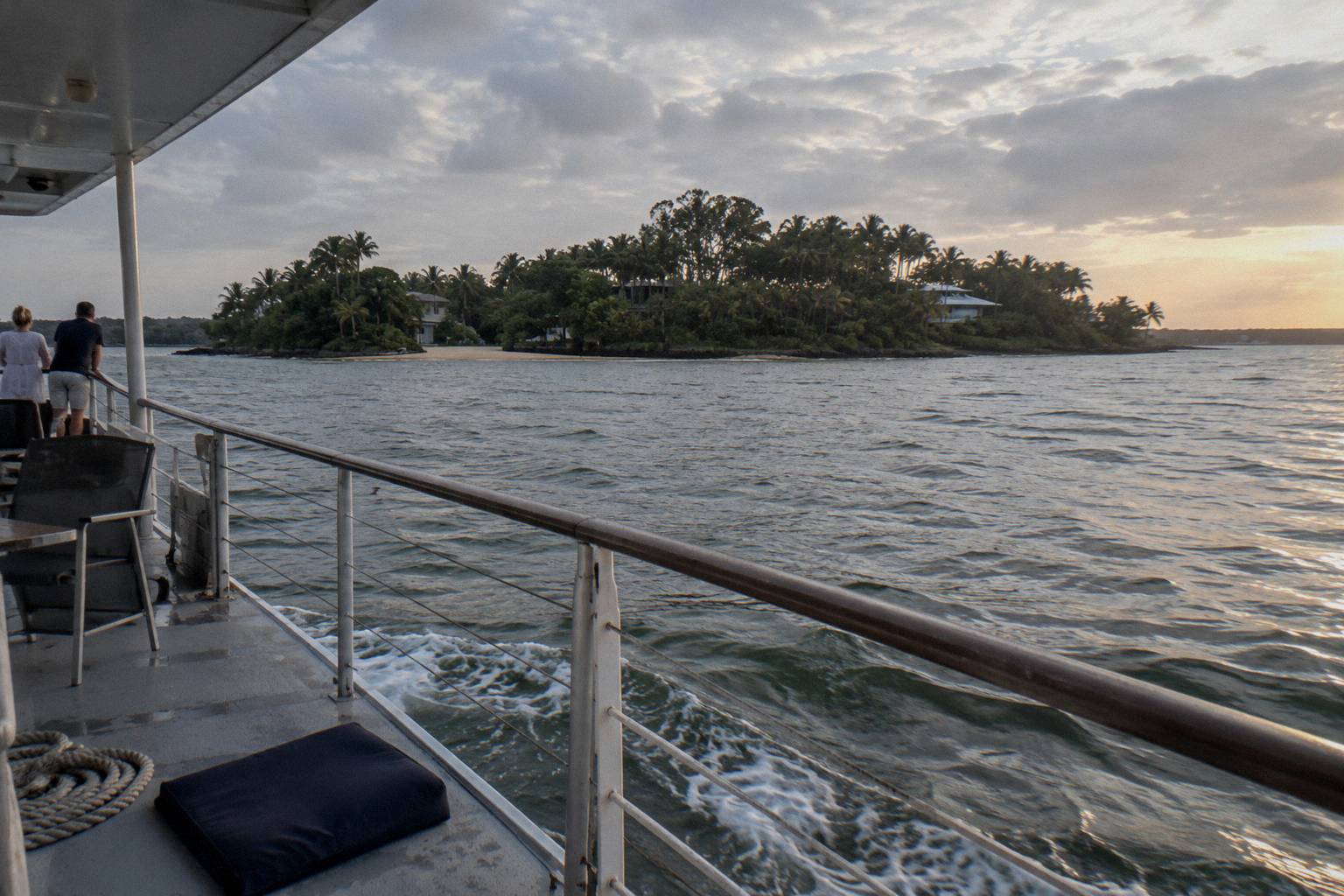
Landmarks give structure. On the upper route, Makepeace Island, a privately owned island, is the standout silhouette, and the North Shore ferry crossing adds a moving element: the Council's Noosa North Shore ferry crosses from the river end of Moorindil Street, Tewantin, about every 10 minutes, and a lit ferry against a darkening sky is one of the strongest frames available. On the lower route, the canal-front homes and the mountain backdrop towards the river mouth do the same work. For the recurring question about the river's most talked-about animals, our post on whether you can see dolphins on the Noosa River at sunset addresses it directly.
Common Mistakes Photographers Make On The River
The recurring errors are boarding at the wrong hour for the season, packing too much gear onto a moving deck, fixating on one side of the boat, and leaving before the afterglow. Sunset is a single moment, but the light show runs well past it, and the last fifteen minutes of deep colour often outperform the sun-on-horizon frame everyone crowds the rail for.
The seasonal timing mistake is the most expensive. Book a 5pm-style summer slot in June and the sun has already gone; book a winter slot in January and you will sit in flat daylight for an hour before anything happens. Work from the monthly table above and let the operator's calendar do the rest. The second mistake is treating the trip as a single-frame opportunity: with 1.5 to 2.5 hours on the water, you get a full arc of light, and the strongest portfolios from these routes usually mix silhouettes, reflections and detail shots of boats, birds and structures.
| Mistake | Why it costs you shots | Simple fix |
|---|---|---|
| Ignoring the monthly sunset swing | Wrong hour, missed light entirely | Book from the sunset table, season first |
| Locking to one side of the boat | River bends swap the light side | Plan to move between decks and sides |
| Heavy tripod on a moving deck | Motion defeats it, space is tight | Hand-hold, brace on railings, keep it light |
| Packing for the beach, not the boat | Winter decks run cold and damp | Layers, gloves, jacket per the season table |
| Leaving at the moment of sunset | Afterglow frames get abandoned | Stay for the return leg's last colour |
Departure logistics cause their own share of missed minutes. Arrive 15 minutes before the Noosa Queen departure as its booking terms ask, and note that Noosa Marina in Tewantin offers 3 hours of free parking with your number plate registered by QR code or ticket machine, extra time purchasable. At Noosaville, the Council lists the Gympie Terrace and Albert Street car parks as 2P and untimed areas, with street parking along the foreshore. Full boarding details for every jetty are in our departure points guide. More on timing your arrival is in whether you need to arrive early for a sunset cruise.
Planning The Whole Evening Around The Light
Build the evening backwards from sunset, not forwards from dinner. Take the month's sunset time, subtract the cruise duration to find when you board, subtract travel and parking to find when you leave, and the whole schedule writes itself. The three evening cruises, from US$26 and US$40.45 per person in US dollars, all let you cancel free up to 24 hours before departure for a full refund.
Winter rewards the well-organised. A June sunset at about 5:03pm with the Noosa Queen's 1.5 hour duration puts you back at the marina with your evening intact, while the Noosaville cruise's 2.5 hour round trip from Noosaville in the same month runs deep into the blue hour, which suits photographers who want the deep-colour aftermath. Summer flips the practical maths: a 6:45pm January sunset means late boarding and a finish well after dark, and the warm air means you can comfortably stay on an open deck the whole time.
Cancellation terms make flexible planning safe. Every trip here states free cancellation up to 24 hours before the start for a full refund, and the Noosa Queen operator additionally offers a full refund if it cancels for severe weather. Since no forecast is reliable a month out, book the date that fits the sunset table, then watch the sky in the final days; the Tewantin climate means July through September give you the best statistical odds of a dry, clear evening. For the broader question of seasonal choice, our summer or winter evening comparison works through the trade-offs.
Whichever boat you choose, the discipline is the same: know the month's sunset time before you book, match the vessel to the frames you want, and stay out past the moment the sun disappears. The river supplies the rest. Noosa Sunset Cruises keeps the full set of evening options, prices and calendars in one place for the days you are ready to plan.
Common Questions About Sunset Photography On The Noosa River
What Time Does The Sun Set In Noosa Each Month?
Sunset at Noosaville runs from about 5:03pm in June to about 6:45pm in January, computed for the 15th of each month and accurate to about two minutes. March sits near 6:06pm, September near 5:40pm and December near 6:36pm. The day-to-day change stays under a minute in most months.
Which Sunset Boat Is Best For Photography?
It depends on your subject. The Noosa Queen offers multi-deck elevation and open decks on a 1.5 hour trip, the Noosaville cruise gives the longest window at about 2.5 hours including the canals, and the Stillwater catamaran carries up to 40 guests for about 1 hour 45 minutes with a welcome drink included. All three operate on smooth river water.
Does One Side Of The Boat Have The Better Sunset View?
No one side is best. The river bends, the boats turn at the head of their routes and the sun's position shifts with the season, so the shooting side changes several times during a trip. Plan to move between decks and sides rather than committing to one rail.
What Should I Wear To Photograph Sunset From A Boat In Noosa?
Comfortable clothes in layers with a light jacket or jumper, per the Noosa Queen operator's advice. Tewantin's mean minimum is 11.3 °C in July and 22.0 °C in January, so winter evenings on an open deck need real warmth, gloves that let you work camera controls and closed shoes for a damp deck.
What Wildlife Might I Photograph On The River At Sunset?
The Noosa Queen operator says guests often spot Whistling Kite, Australian Pelican, Great Egret, Pied Cormorant and Azure Kingfisher, and lists a chance to spot kangaroos. The Noosaville cruise includes skipper commentary on local wildlife. Sightings are never promised, so keep a long lens within reach.
Can I Cancel A Sunset Cruise If The Light Or Weather Looks Bad?
Yes. All the evening trips state free cancellation up to 24 hours before departure for a full refund, and the Noosa Queen operator offers a full refund if it cancels for severe weather. Book the date that matches the sunset table, then watch the forecast in the final days.